Orwell Astronomical Society (Ipswich)
Satellites, 08 August 2015 - 19 December 2025
Satellites can be seen in the night sky as fast-moving points of light, shining by reflecting sunlight. A satellite with large solar panels or communications arrays, such as a member of the Iridium cluster, can cause a bright "flare" when it reflects sunlight directly towards the observer. With growing numbers of satellite constellations in low earth orbit, there are increasing numbers of flares, which can often compromise astrophotography.
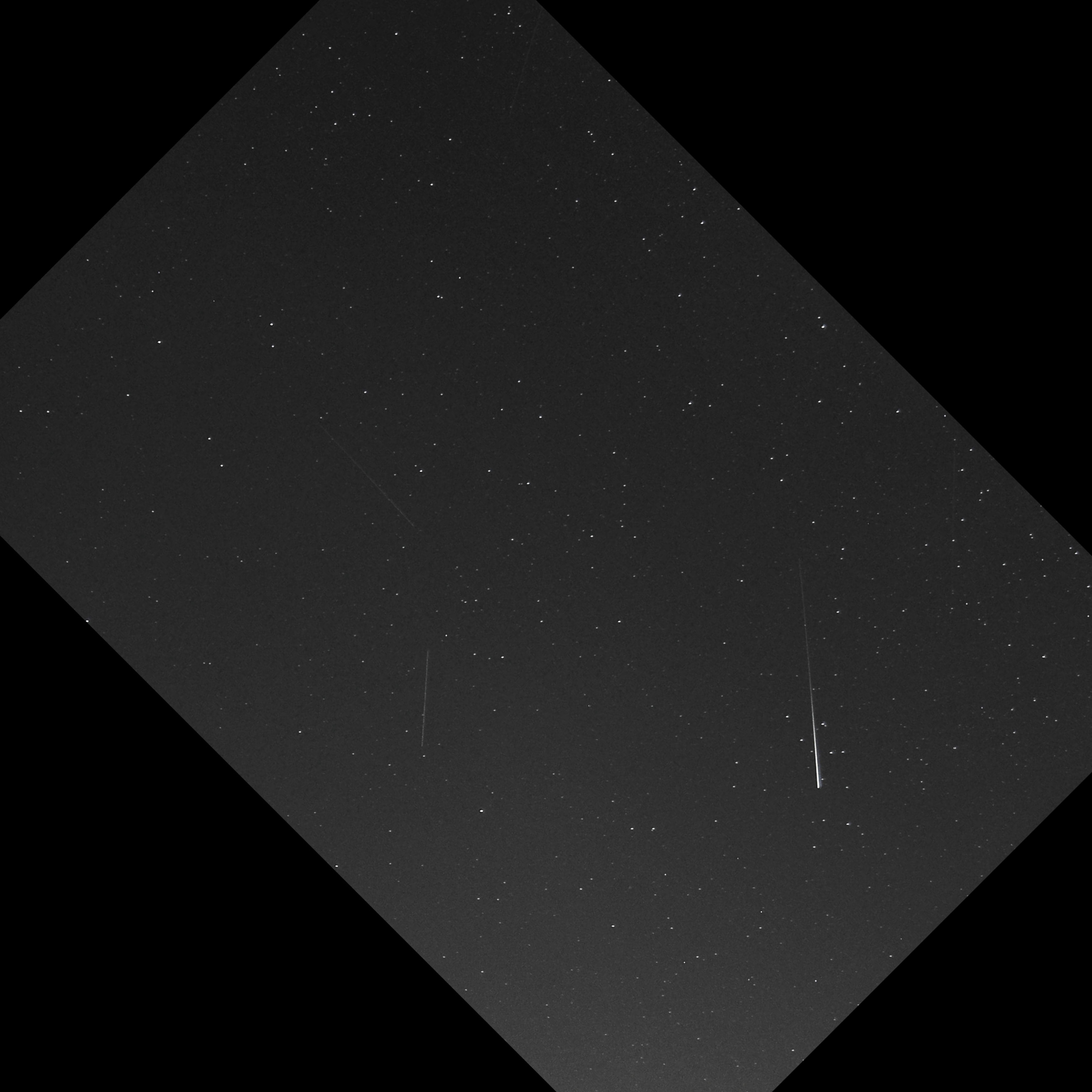
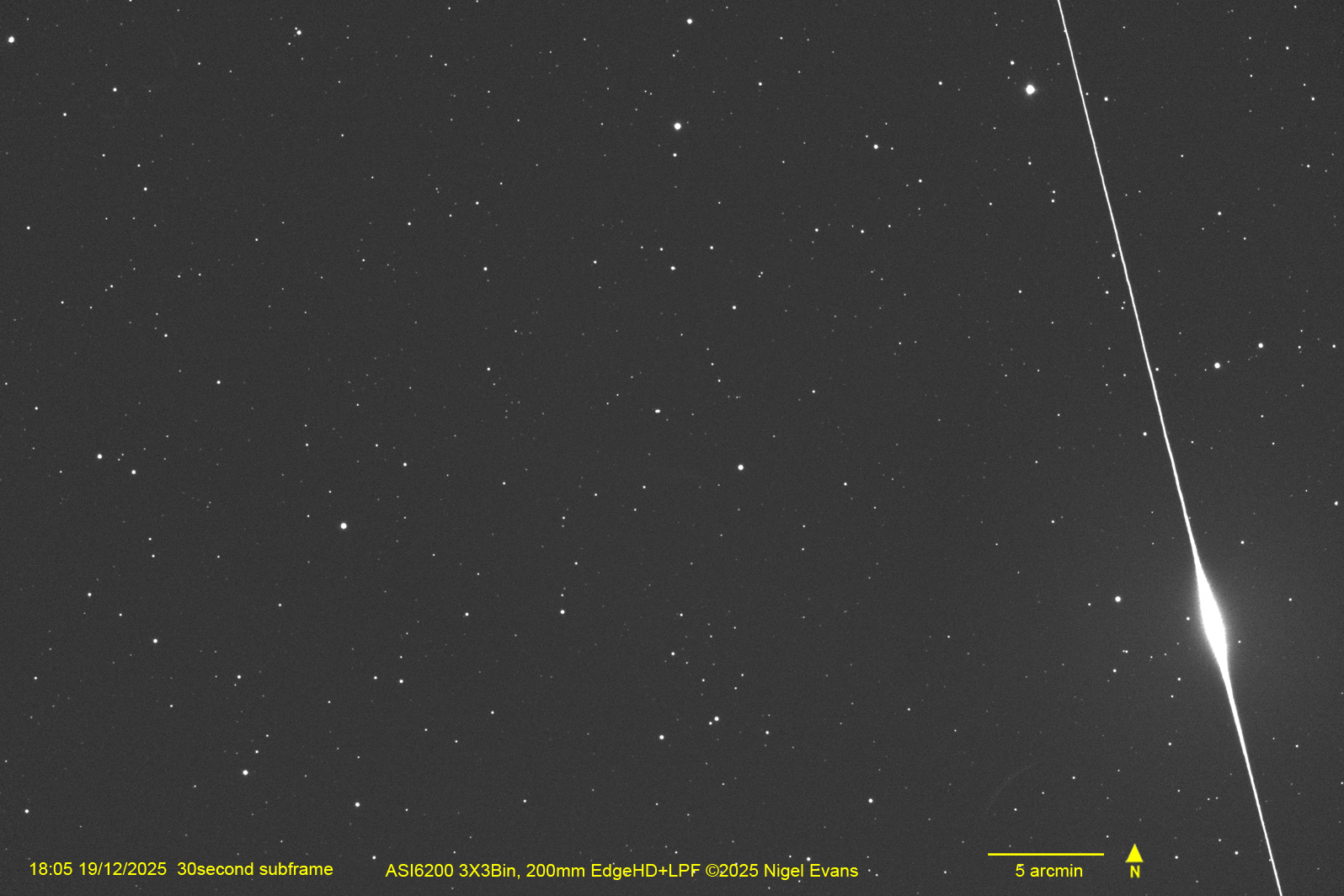
During efforts to record comet C/2025 K1 (ATLAS), at 18:05:06 UT on 19 December 2025 I recorded a glint from a satellite in the field of view of my telescope (200 mm Celestron Edge HD. (The comet is present in the image too, but required a stack of multiple images to be seen.)
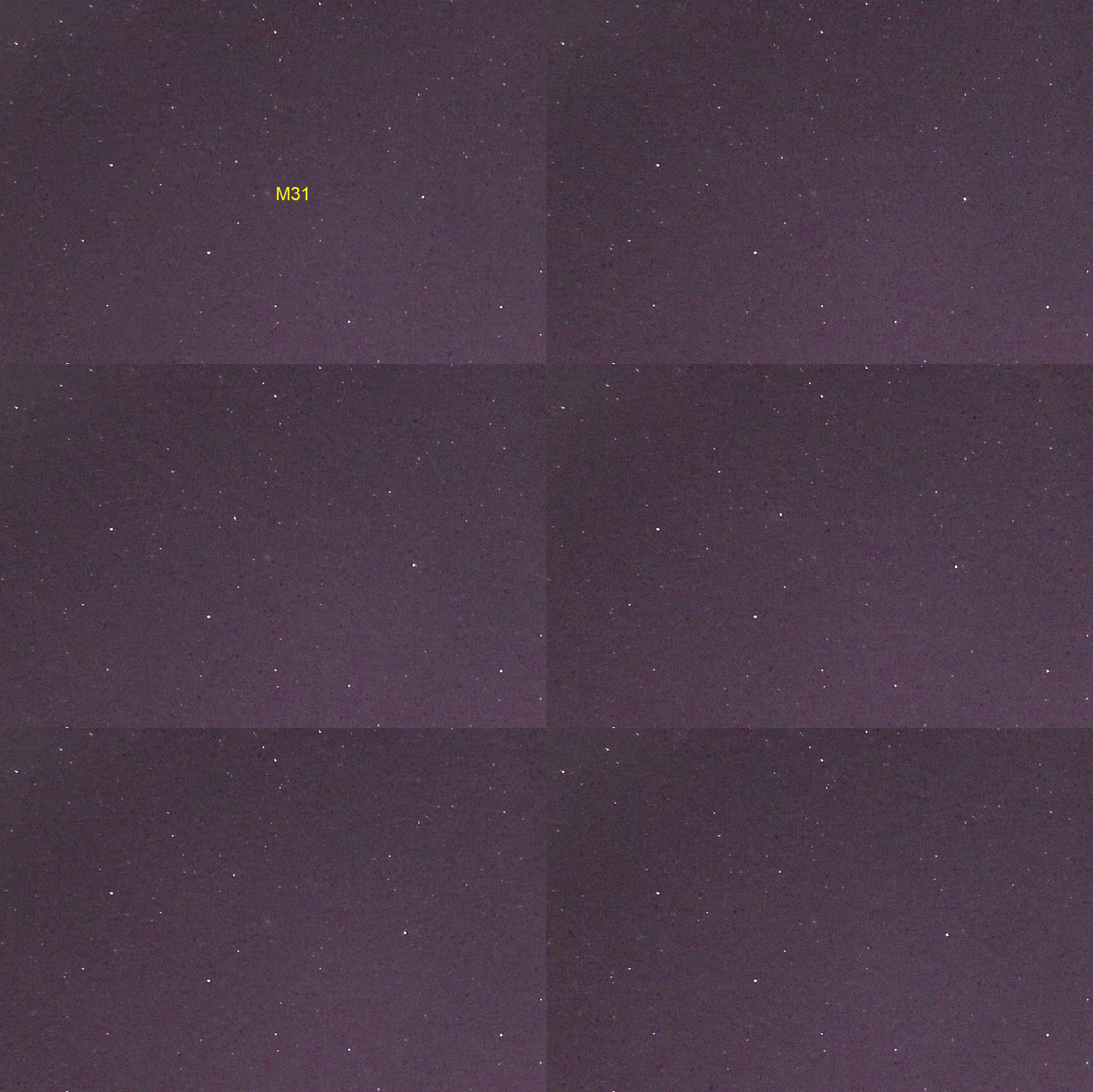
I run several sky cameras, which record objects to approximately magnitude 5. The following animated gif, recorded by one of the cameras, shows the motion of the satellite and the glint! (The gif is on loop, with M31 in the centre of the field of view.)
The following image is based on plate solving the frames from the sky camera. The satellite track and position of the glint are highlighted. The latter is at 0h 59m 27s, 44° 34' 40". (The 4 mm FL of the camera lens gives a pixel size of approximately 2.5 arcminutes). Applying the same approach to the frames from the Celestron HD, with 2000 mm FL and a pixel size of approximately 1 arcsecond, yields a position for the glint of 1h 00m 59s, 44° 41' 05".
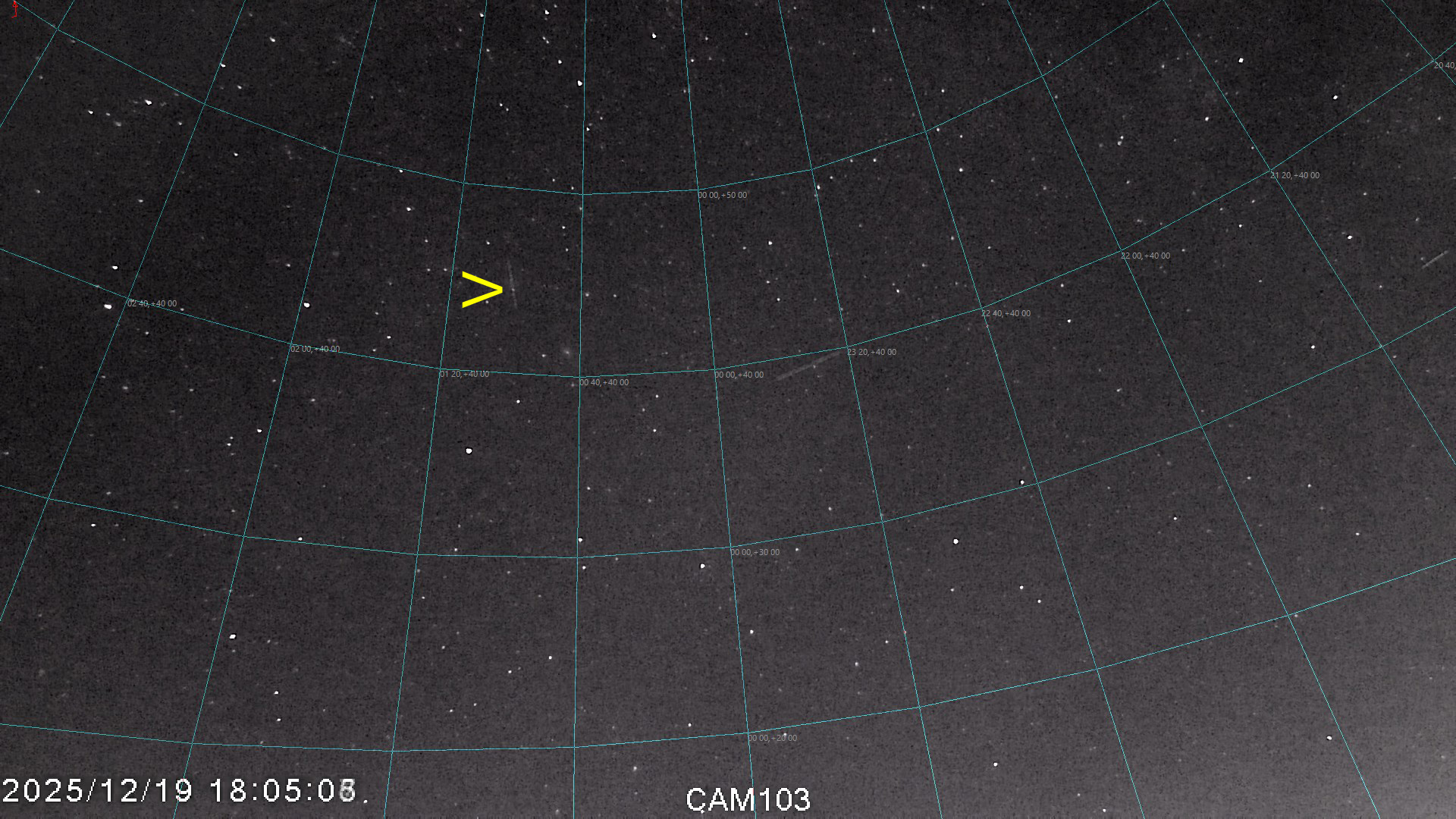
Heavens-Above indicates that the glint was most likely produced by Iridium 5 (COSPAR 1997-020 D, Spacetrack 24795).
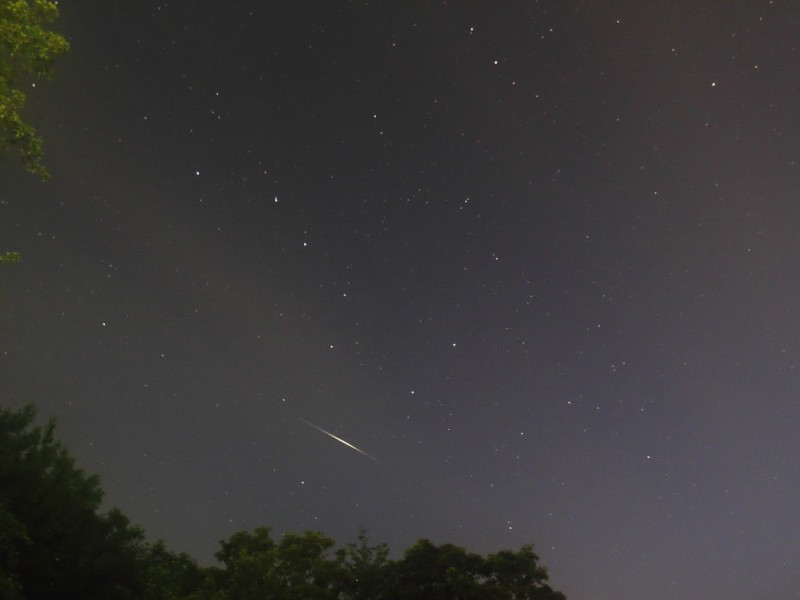
A flare from Iridium 95 below Ursa Major. Canon 60Da camera and Samyang 14mm lens. 30 second exposure.
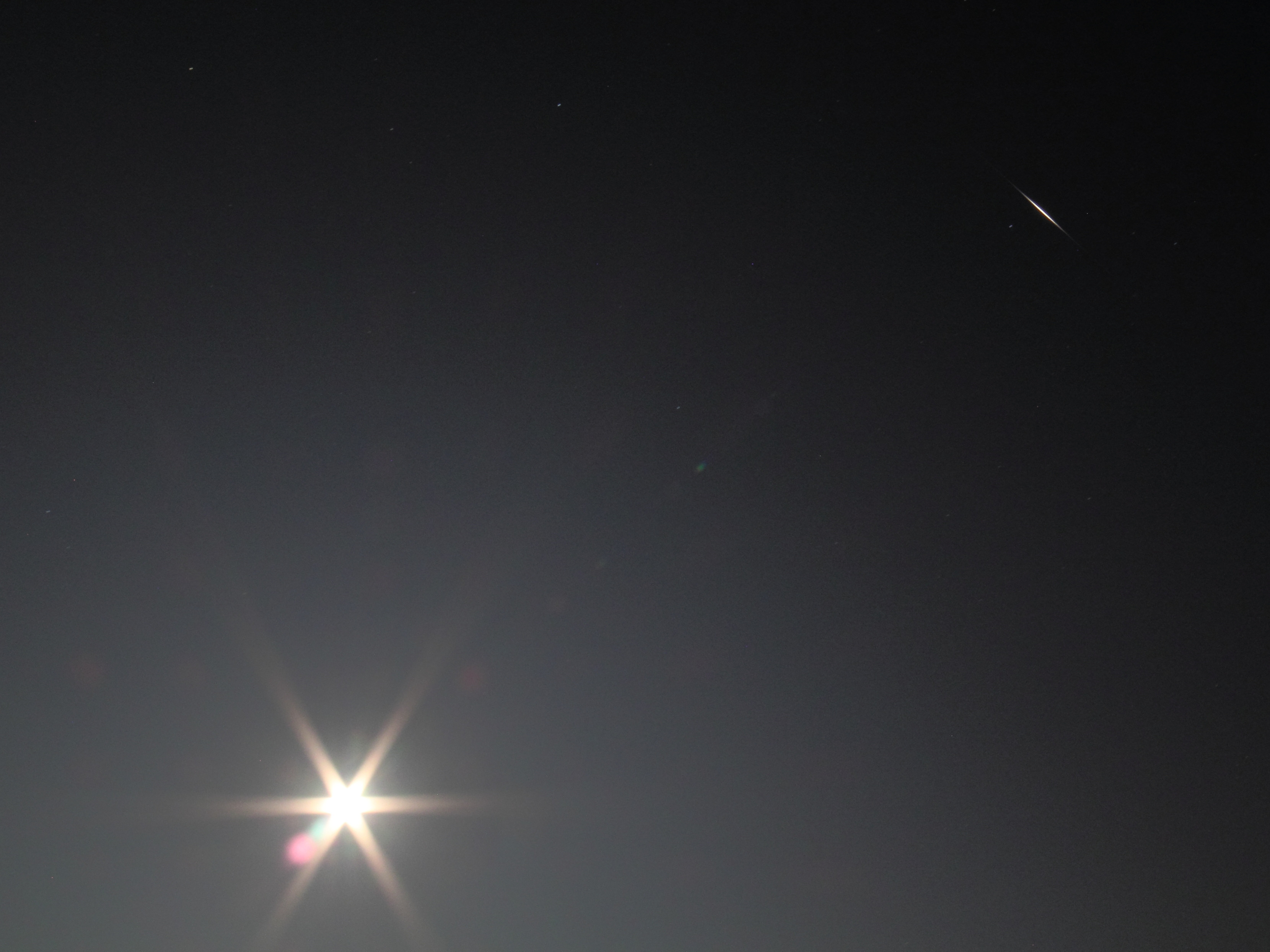
18:42 UT, Canon 60da camera with Samyang 14 mm lens, mounted on a standard tripod. Thirty second exposure at ISO 800, f3.6. A flare from Iridium 76 is visible at the top right. The Moon, almost full (phase 99.2% waxing), is to bottom left.
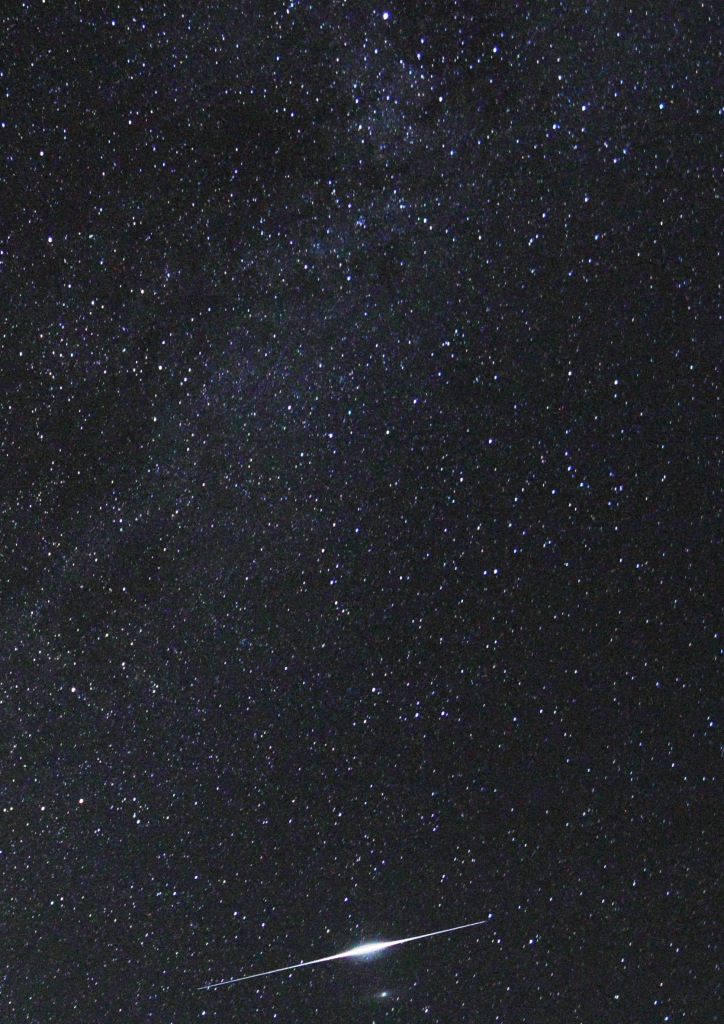
20:35 UT, Canon 1100D camera. A flare from Cosmos 1538. The Andromeda Galaxy, M31, is visible immediately below the flare.
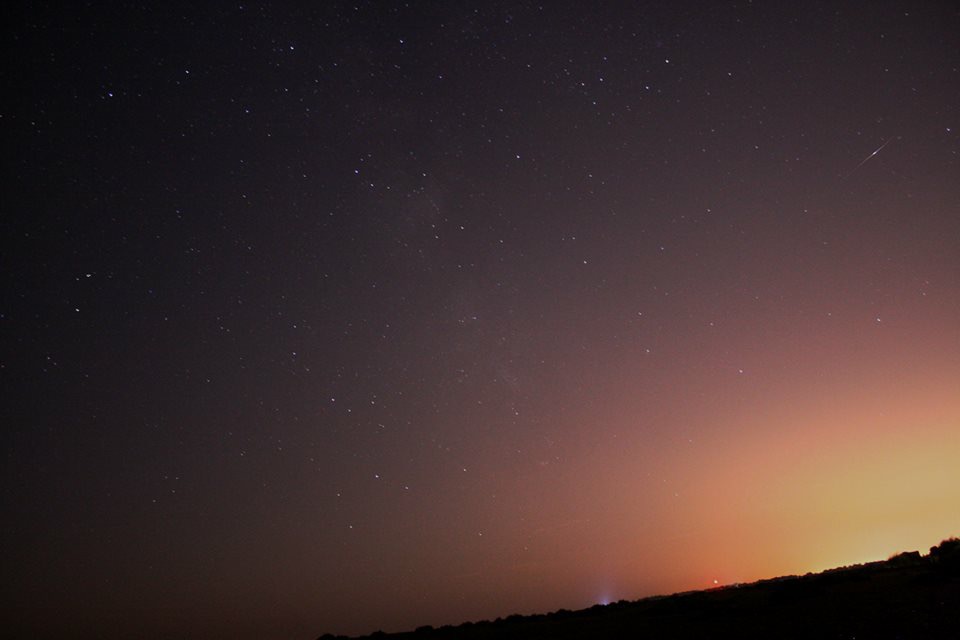
23:54 UT, Canon 30D camera with 18-55 mm lens. A flare from Iridium 39 is visible to the right of the image. Unfortunately, the image is marred by light pollution from Felixstowe; nevertheless it shows (just!), in addition to the flare, the Milky Way running through Sagittarius and Scutum.
21:20 UT, Canon 1100D camera with 14 mm Samyang lens on a barn door mount. 360 second exposure, ISO 800, f2.8. Three satellites are visible! Light pollution limited the capture of faint stars. The satellites are: