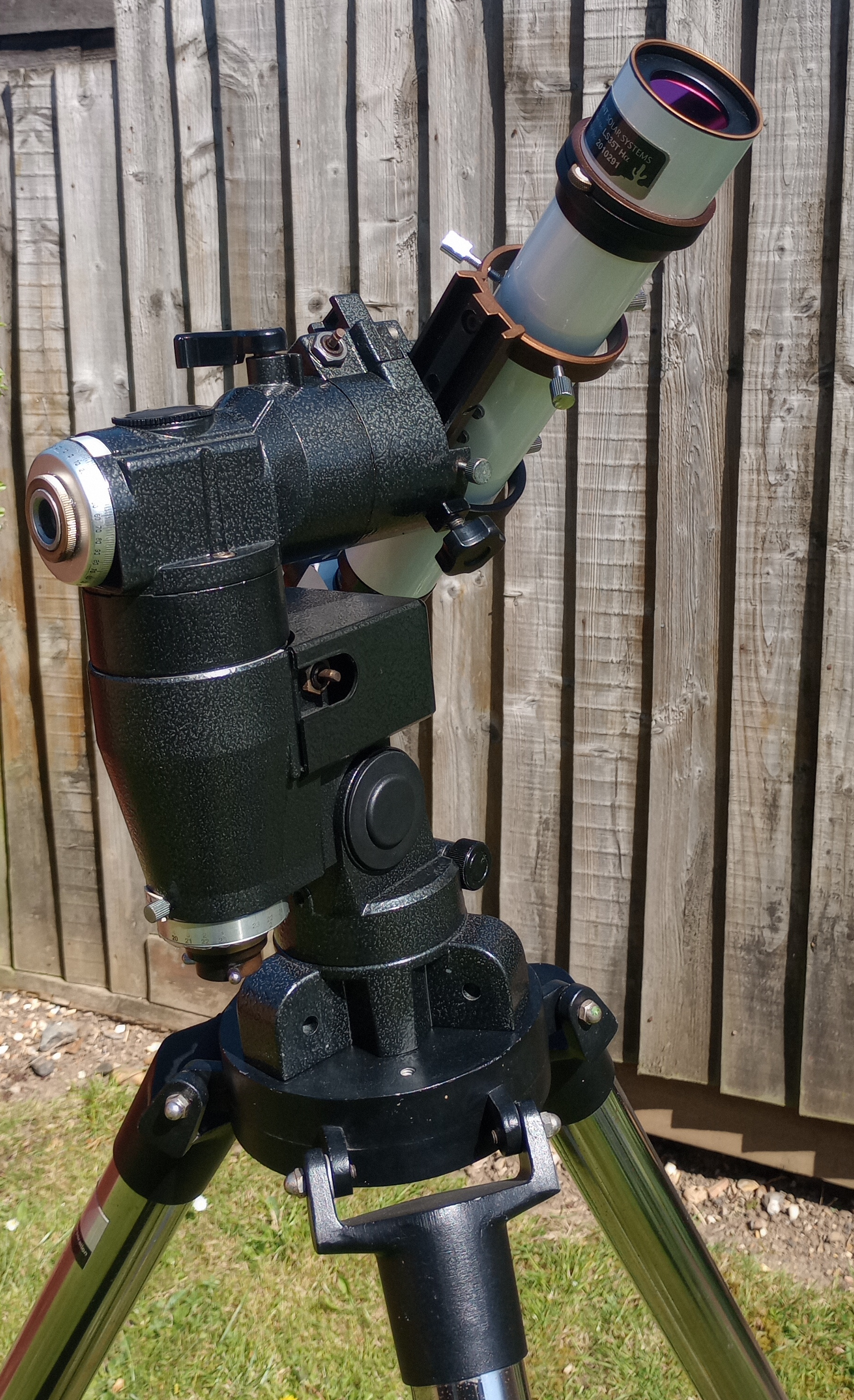
 Lunt LS35.
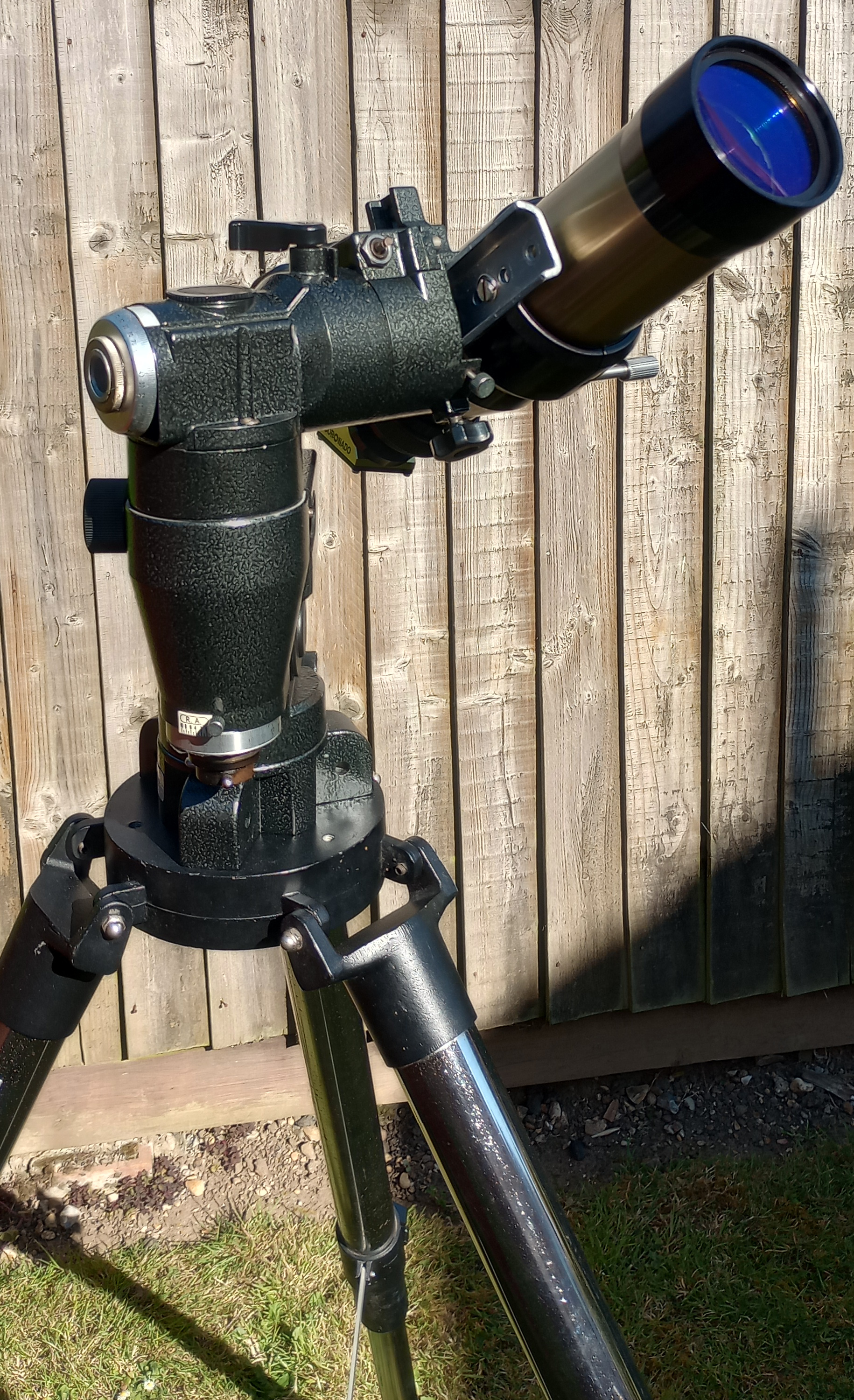 Coronado SolarMax II.
 Coronado PST.
Orwell Astronomical Society (Ipswich)
Sketches Of The Sun,
04 June 2023 - 09 May 2026
Lunt LS35.
Coronado SolarMax II.
Coronado PST.
This page shows sketches of the solar disk made with the following instruments:
Sketches made at the eyepiece of the PST were produced using a pencil and/or crayons. Some of the resulting images were scanned and subsequently post-processed in Gimp v2.6.
Sketches made at the eyepiece of the C4R were post-processed as follows:
Sketches were made at the eyepiece of the LS35 as follows. Initially, the etalon was detuned to a white light view. This allowed the major sunspot groups to be sketched, providing suitable anchor points for the remainder of the image. The scope was then properly tuned by adjusting the thumbscrew by one to two turns to provide an optimal Hα view with best contrast of features including prominences, filaments and active regions. This enabled the sketch to be completed quickly.
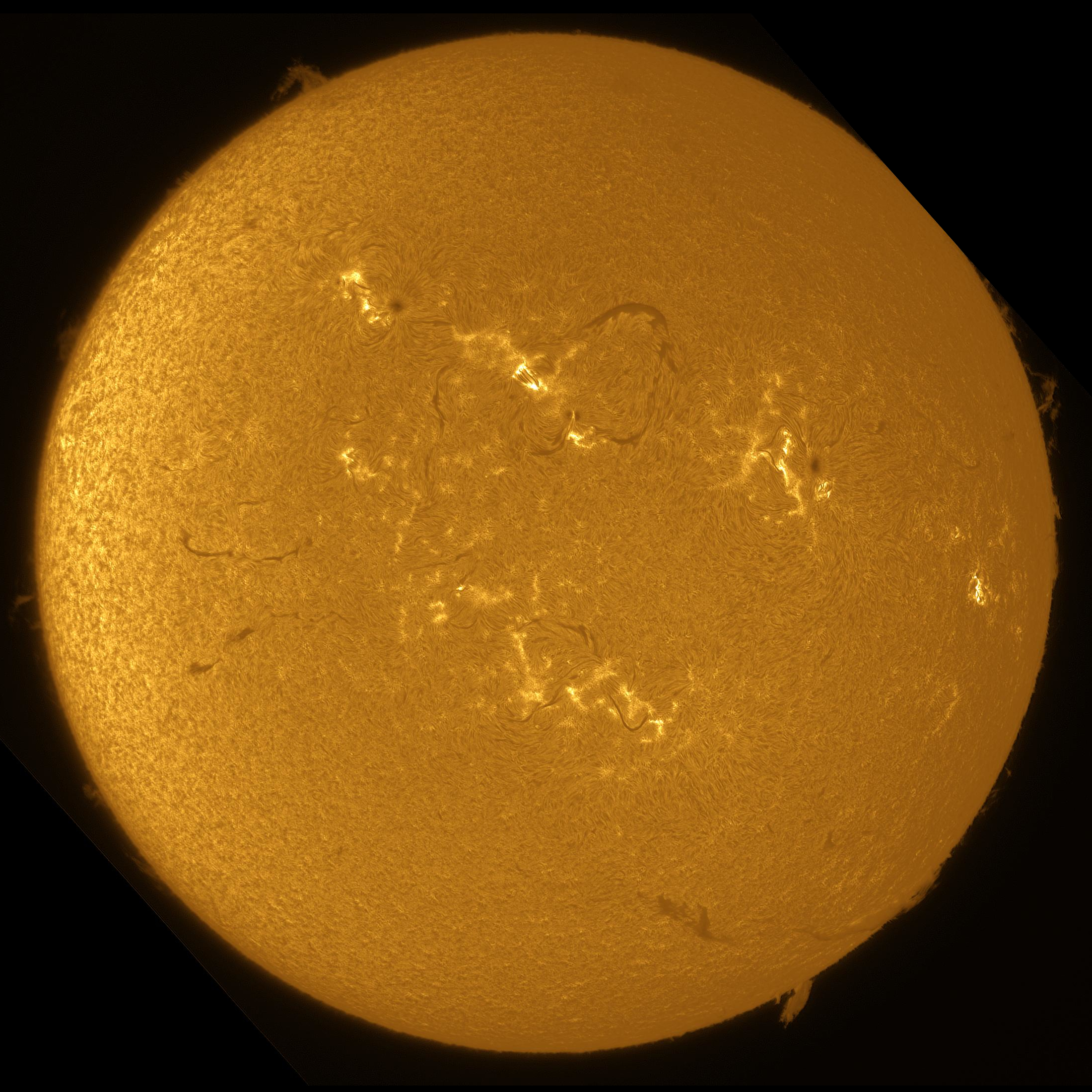
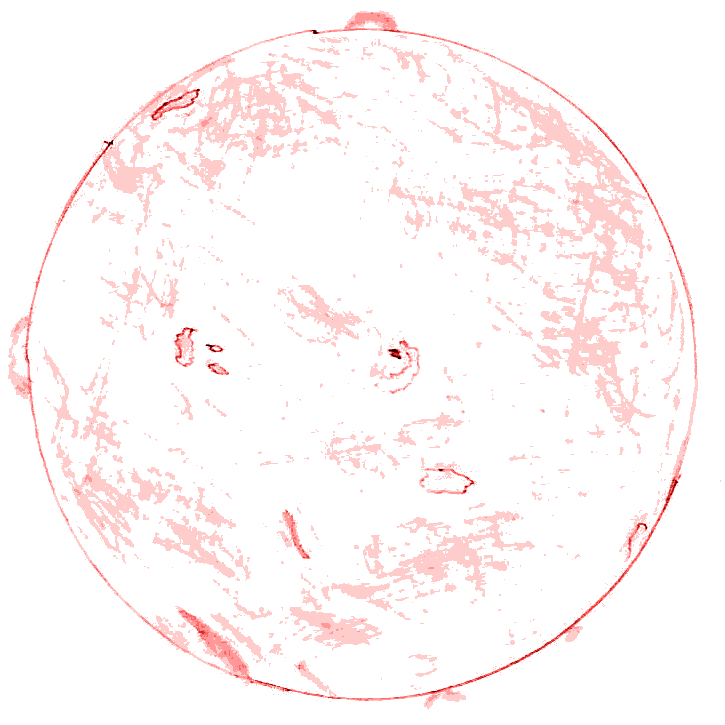
Below, sketches are compared with images for the same day by the US NSO (National Solar Observatory) GONG (Global Oscillation Network Group) and, occasionally, with other images.
Below left: a sketch drawn at the eyepiece of the Coronado PST. I used a Baader Mk. IV Hyperion 8-24 mm zoom eyepiece between 24 mm and 16 mm settings, providing magnification of 17x to 25x and a view of the full solar disk. Below right: the corresponding GONG image.
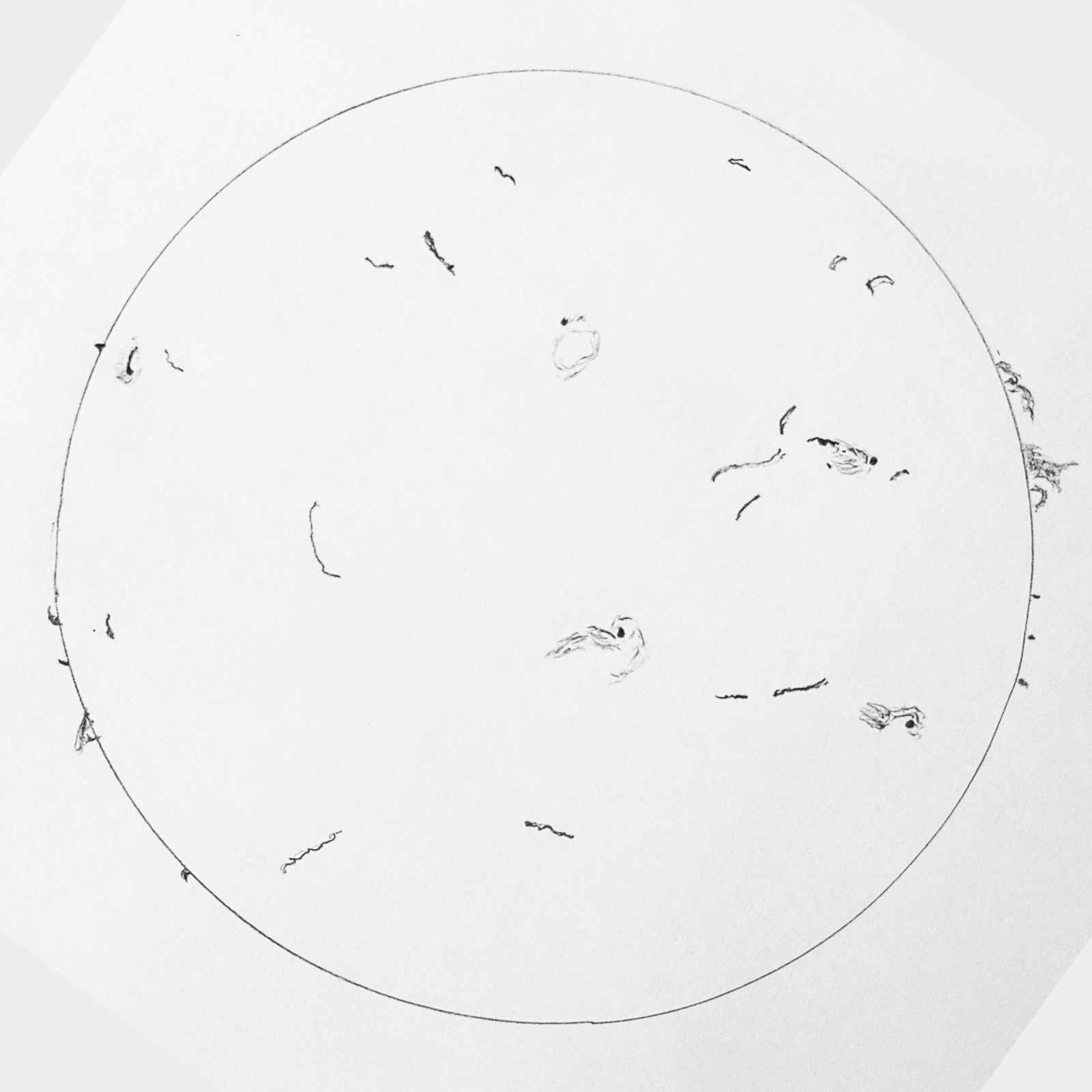

Below left: a sketch drawn at the eyepiece of the Coronado PST. I used a Baader Mk. IV Hyperion 8-24 mm zoom eyepiece between 24 mm and 20 mm settings, providing magnification of 17x to 20x and a view of the full solar disk. Below right: the corresponding GONG image.
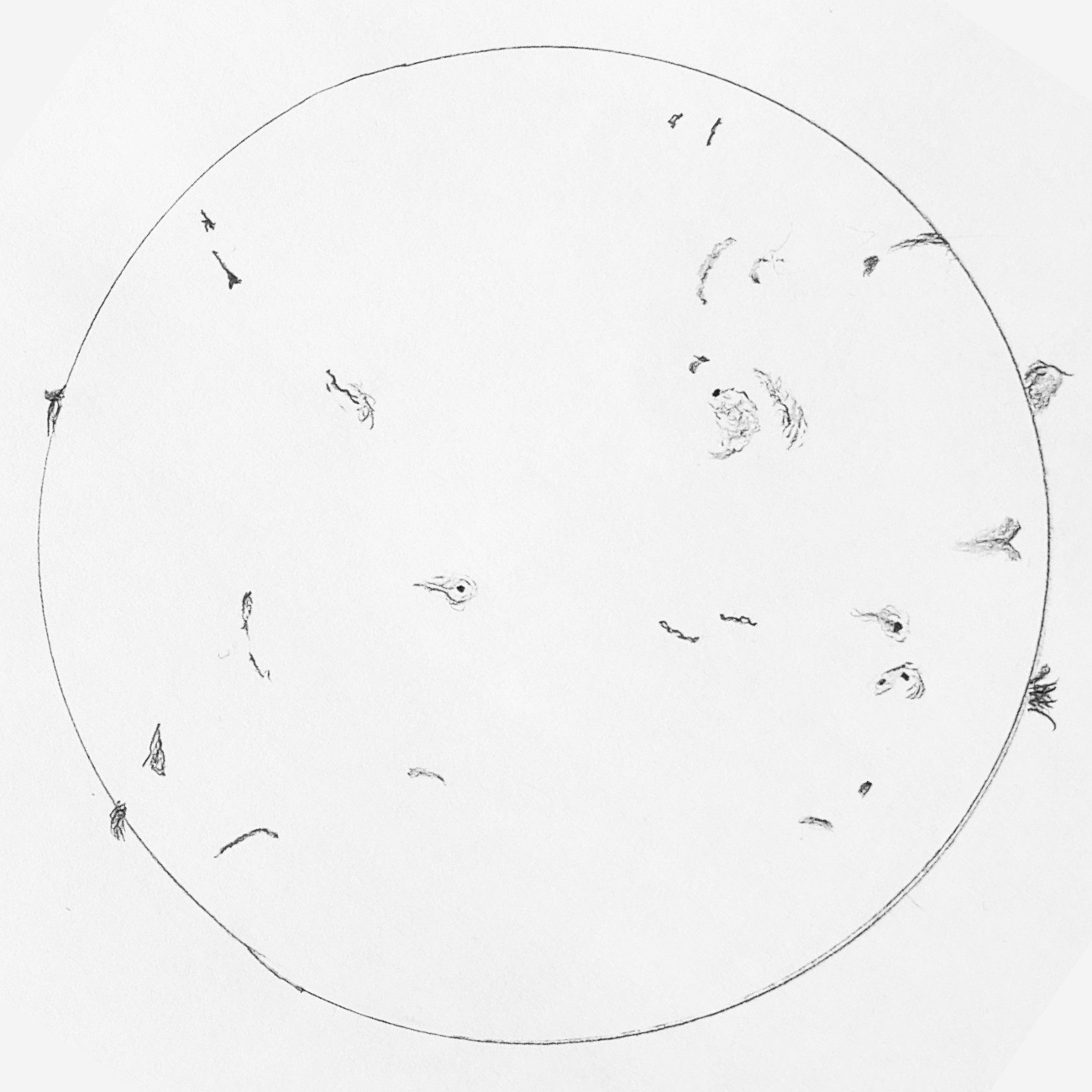

Below left: a sketch drawn at the eyepiece of the Coronado PST. I used a Baader Hyperion 8-24 mm zoom eyepiece at the 12 mm and 8 mm settings, providing magnifications of 33x and 50x. Below right: the corresponding GONG image.
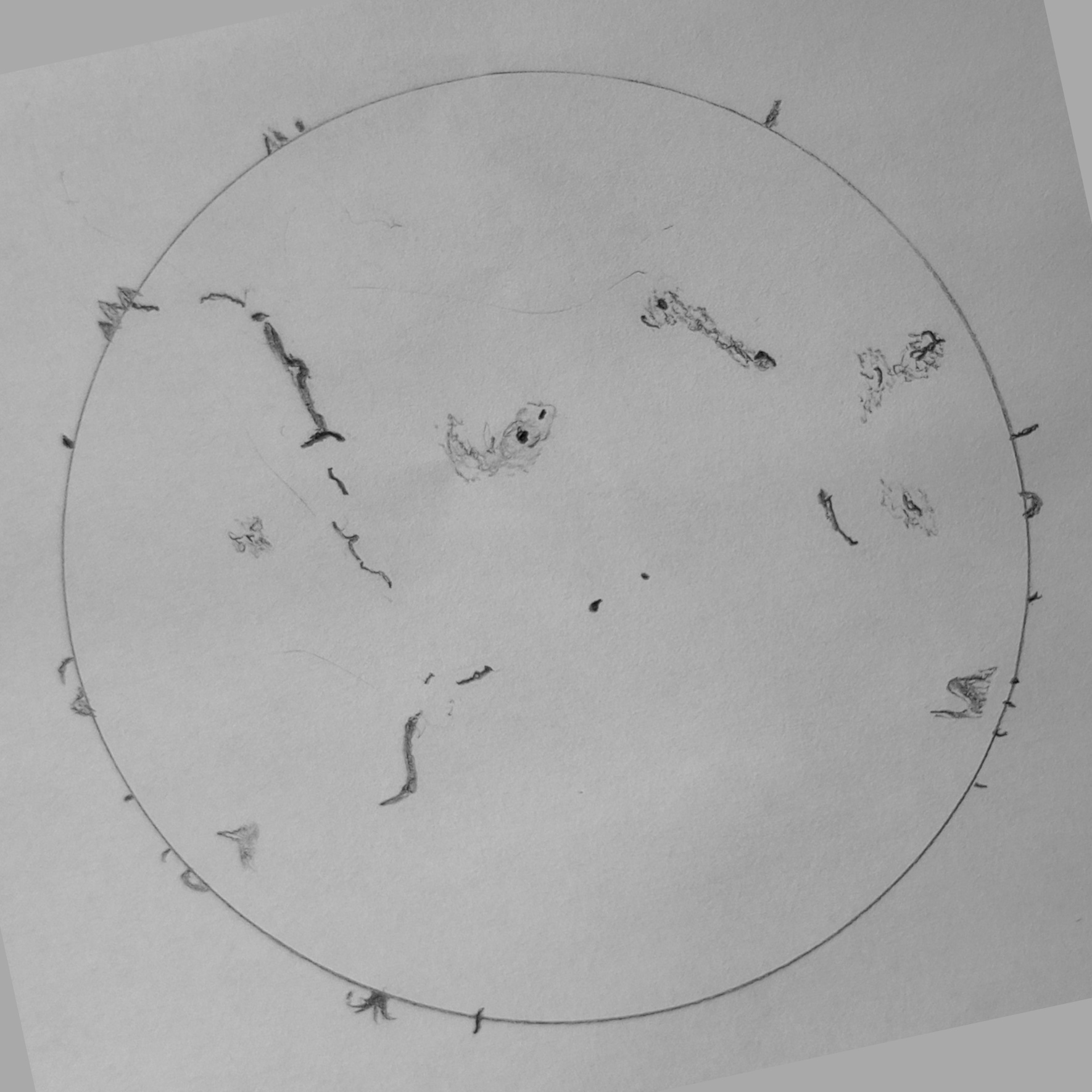
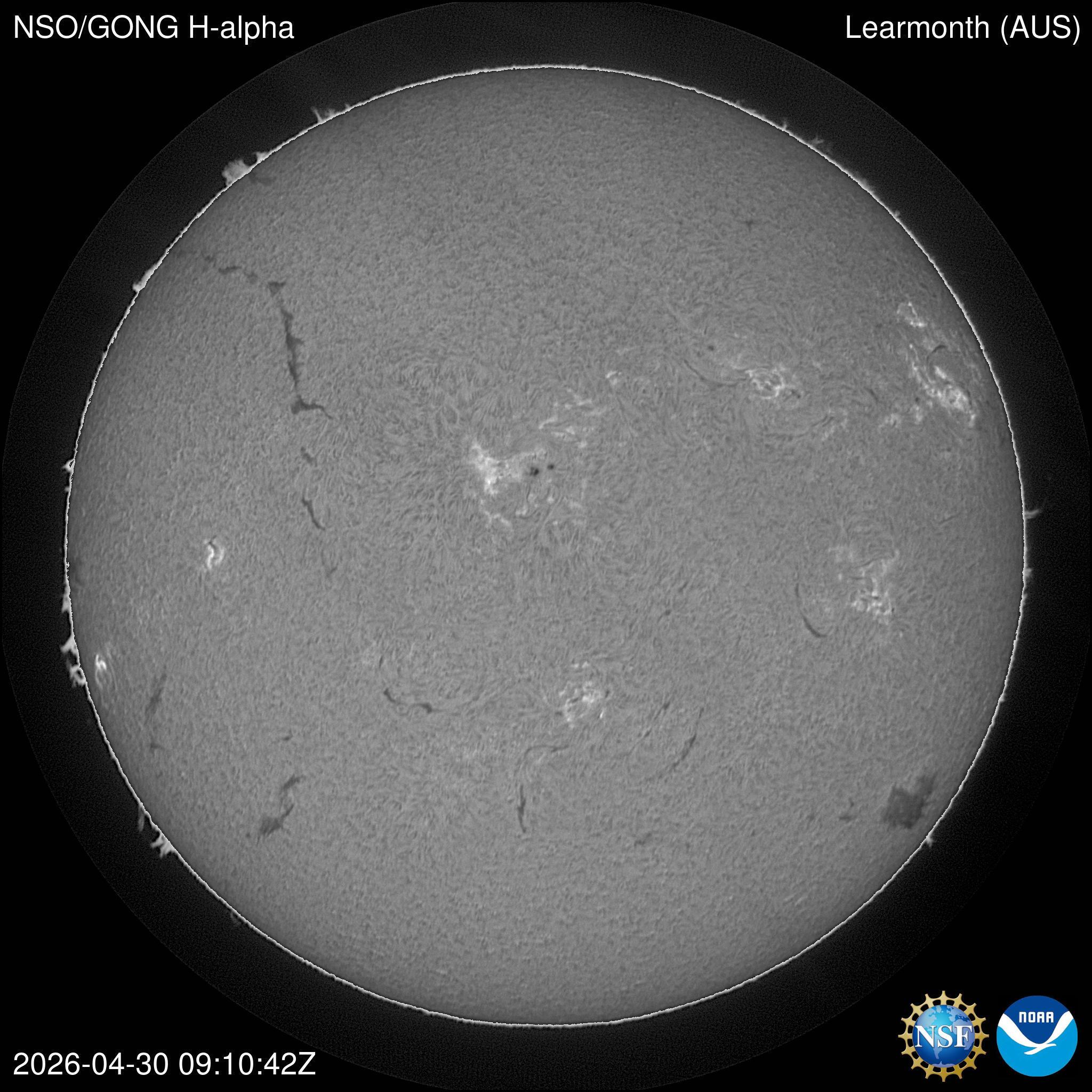
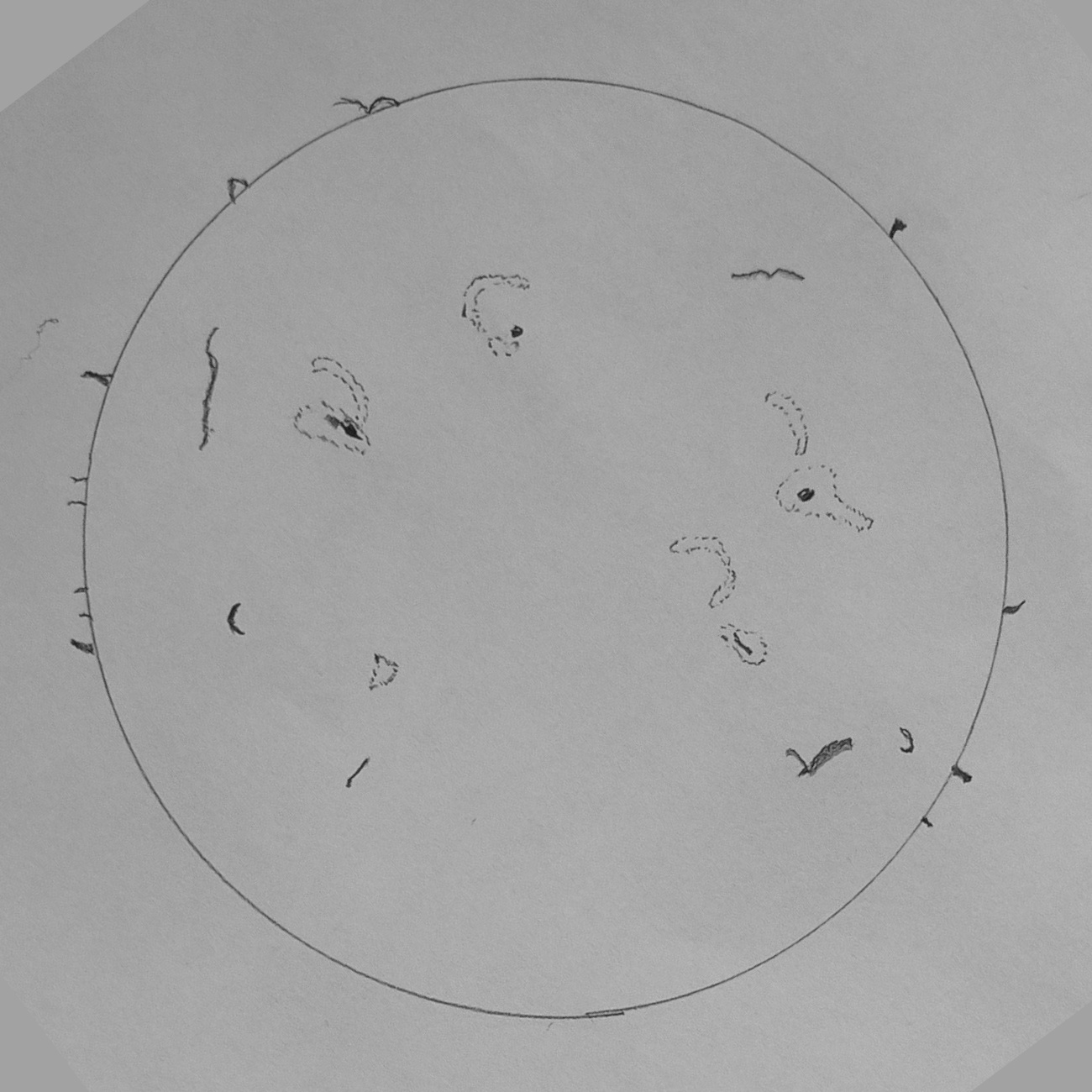
Below left: a sketch drawn at the eyepiece of the LS35. I used a 20 mm Plössl eyepiece providing a magnification of 20x. Below right: the corresponding GONG image.
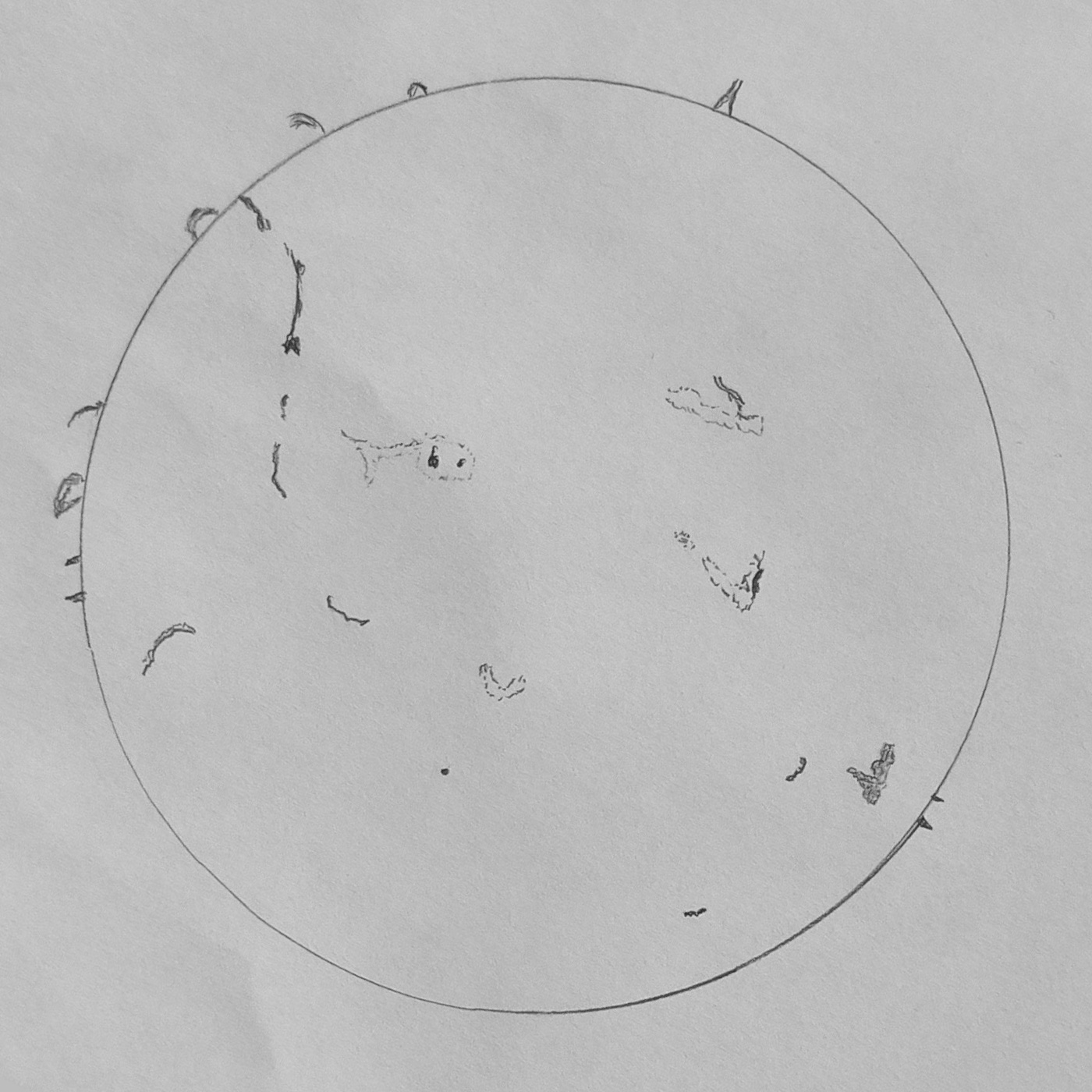
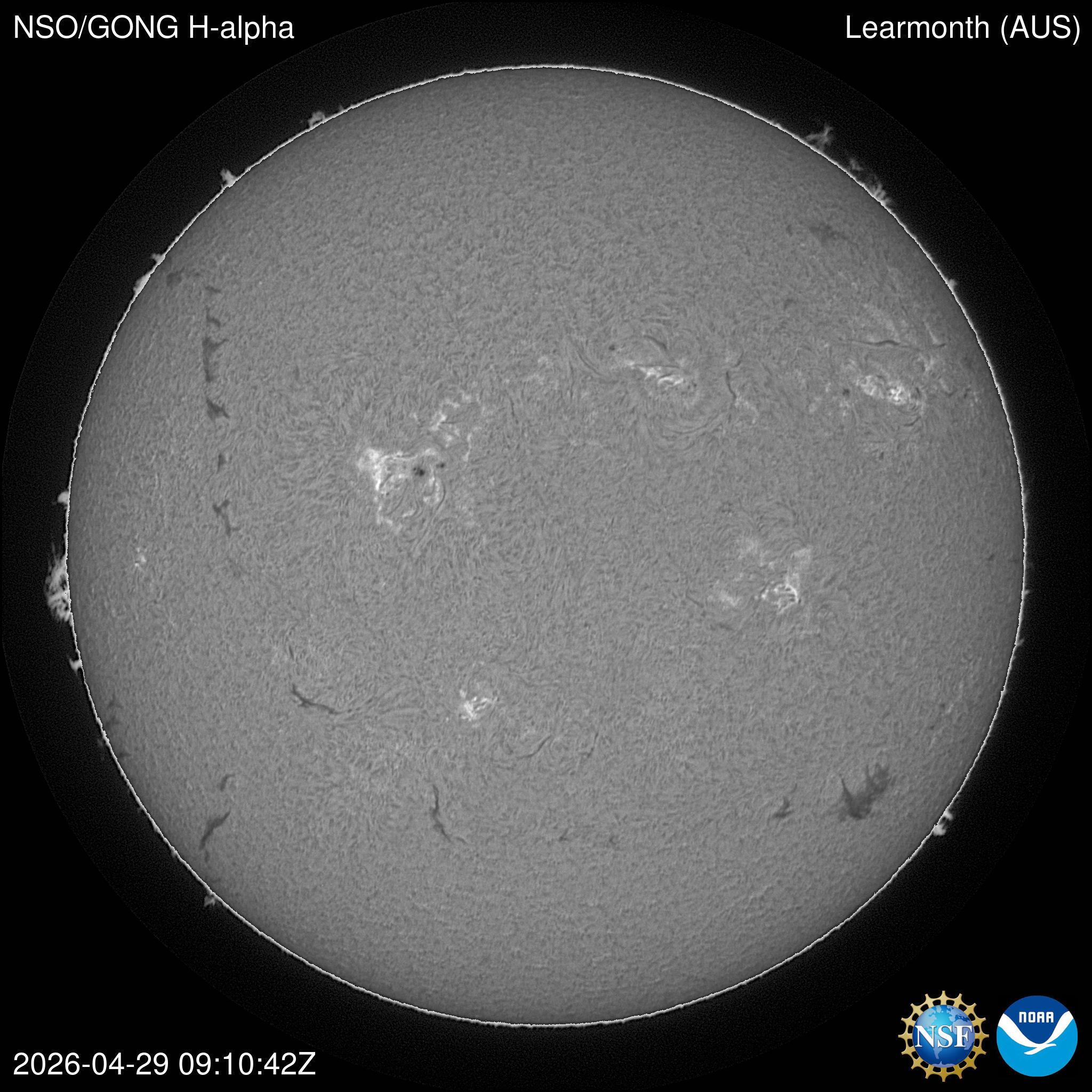
Below left: is a sketch drawn at the eyepiece of the LS35. I used a 20 mm Plössl eyepiece providing a magnification of 20x. Below right: the corresponding GONG image.

Three views of the solar disk on 22 April. Left: a sketch drawn at the eyepiece of the LS35. I used a 20 mm Plössl eyepiece providing a magnification of 20x. Centre: the corresponding GONG image. Right: an image by fellow member of OASI, Steve McElvanney.
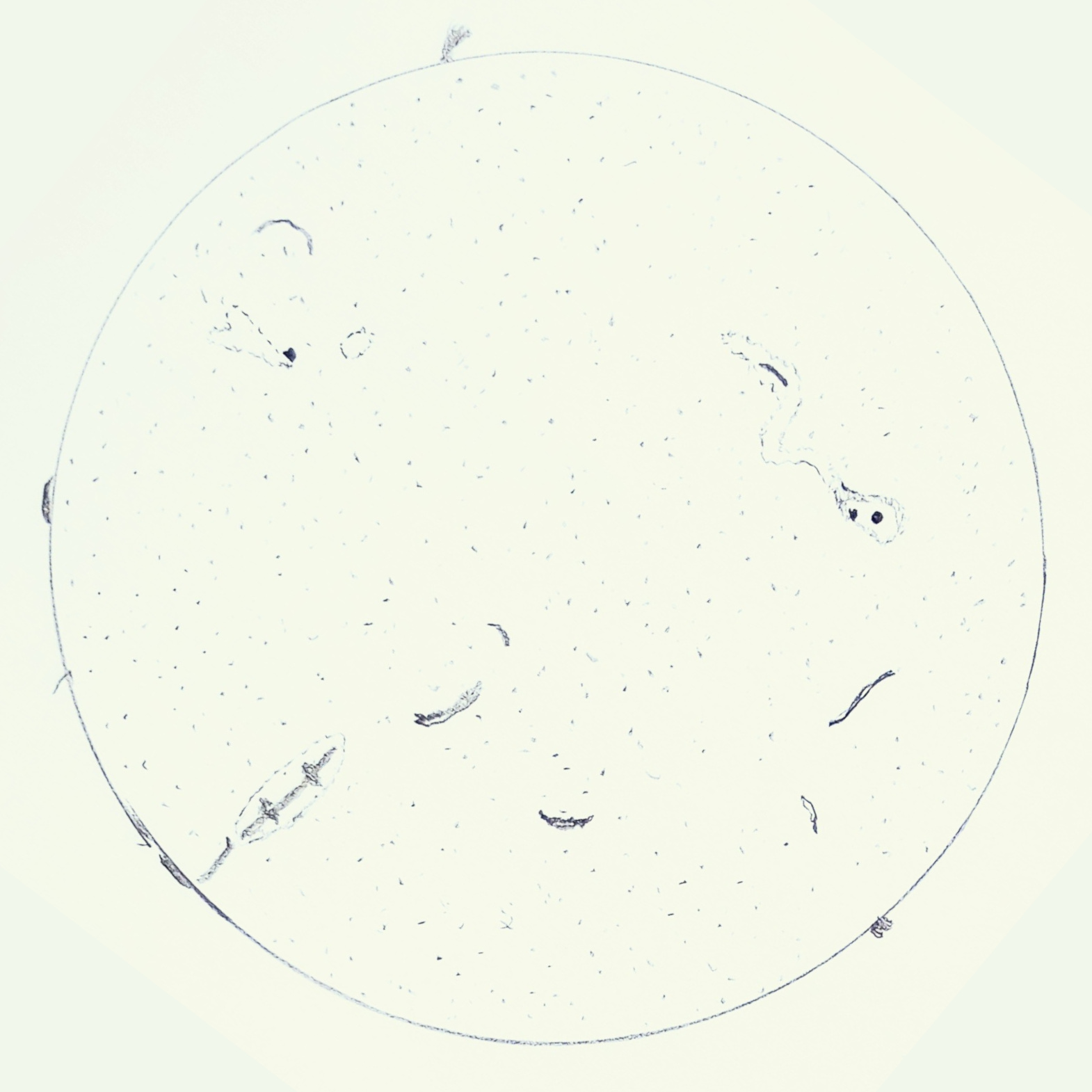

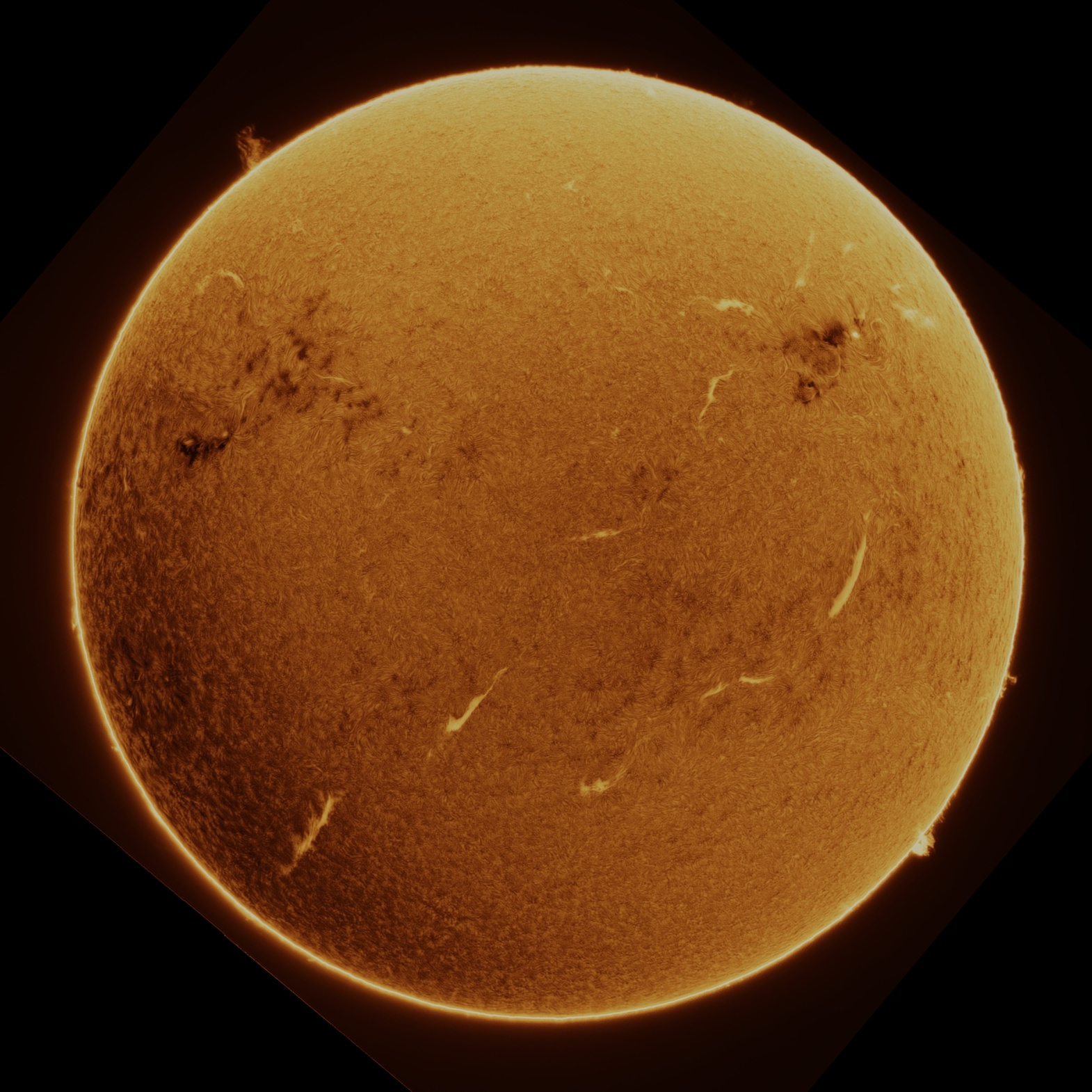
Below left: a sketch drawn at the eyepiece of the LS35. I used 25 and 20 mm Plössl eyepieces providing magnifications of 16x and 20x. Below right: the corresponding GONG image.
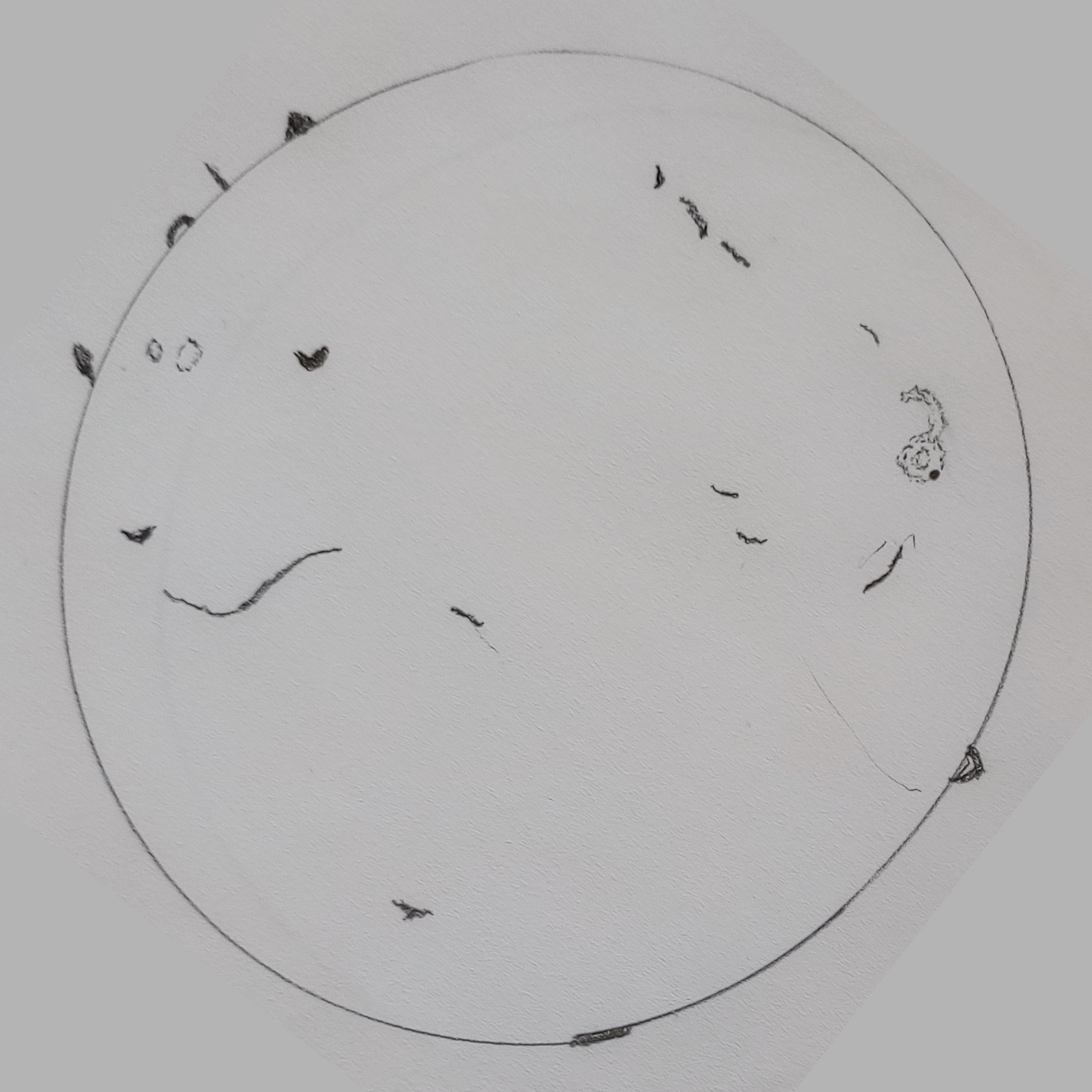
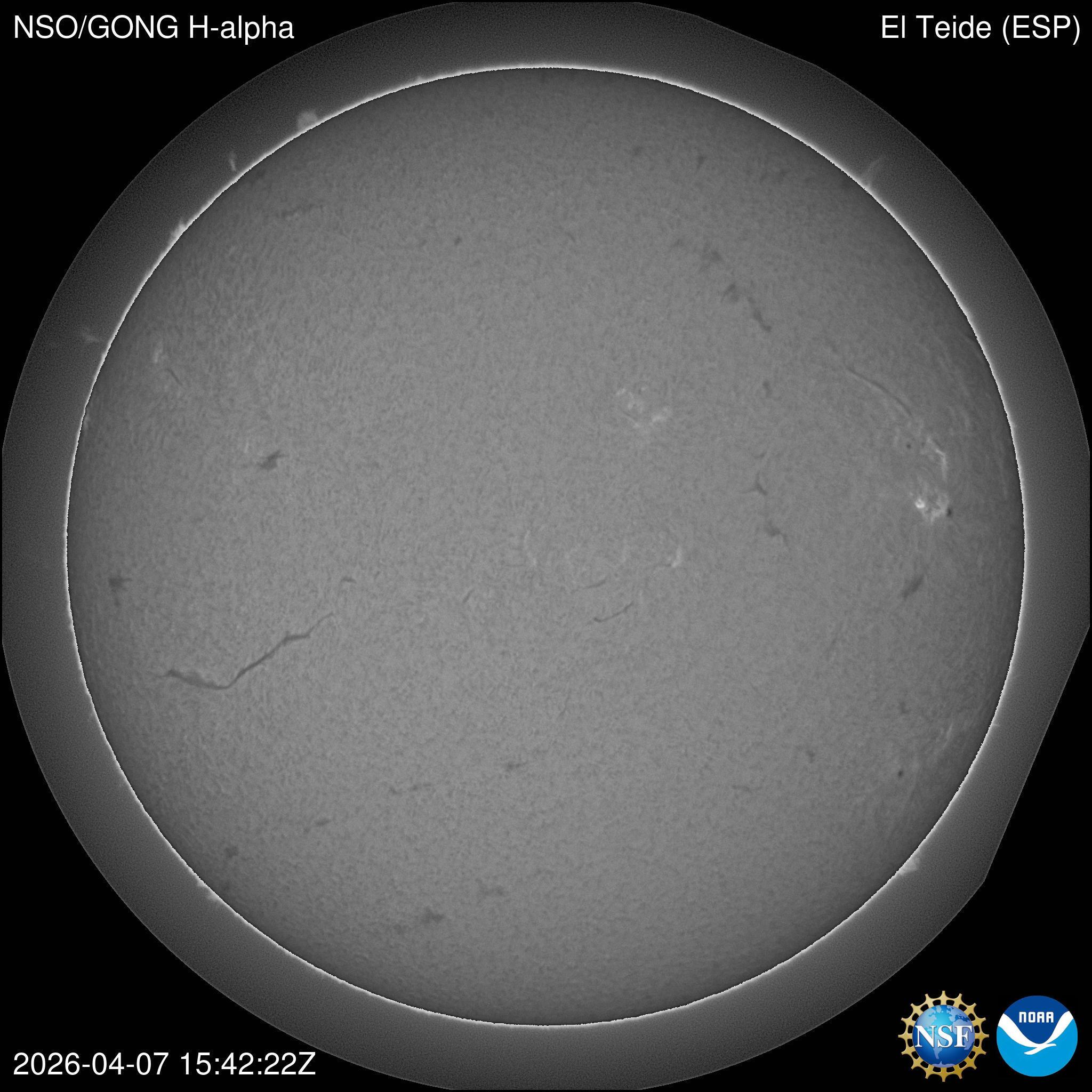
Below left: a sketch drawn at the eyepiece of the LS35. I used a 20 mm Plössl eyepiece providing a magnification of 20x. Below right: the corresponding GONG image.
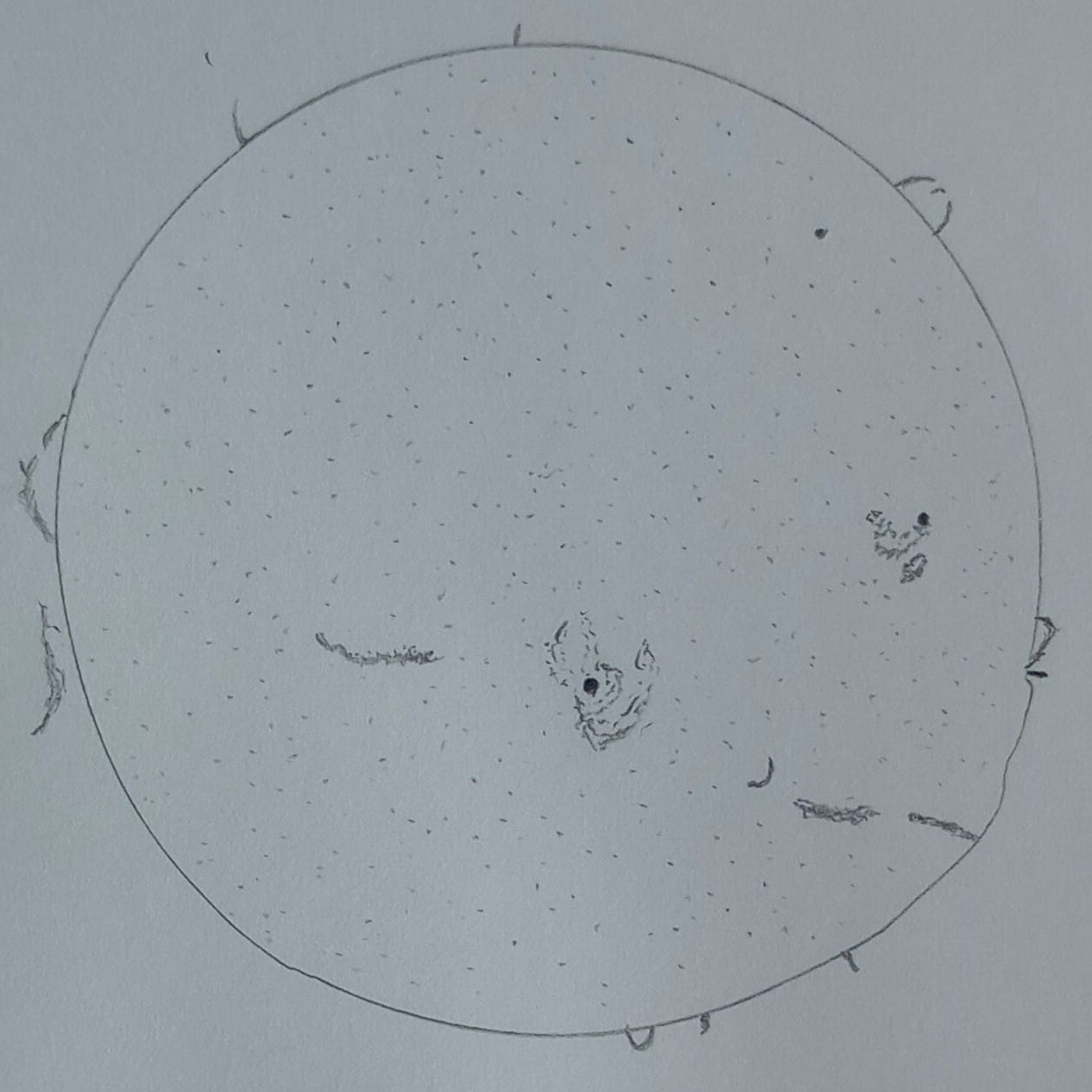

I sketched the Sun 10:00-10:05 UT under a murky sky before clouds thickened and obscured the view. I used the Tasco with a Kendrick solar filter fitted over the dew cap. The eyepiece was a 25 mm Kellner providing a magnification of 28x. Image processed in GIMP 2.6.
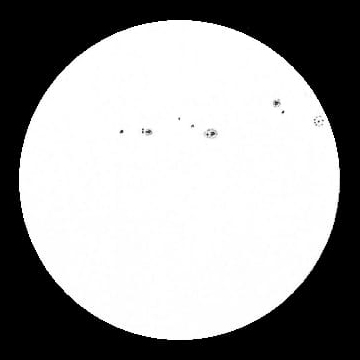
Two views of the solar disk in Hα light. Left: my sketch of the Sun 15:00-15:30 UT using a Lunt LS35 with 20 mm Plössl eyepiece providing a magnification of 20x. Right: image by fellow member of OASI, Steve McElvanney.
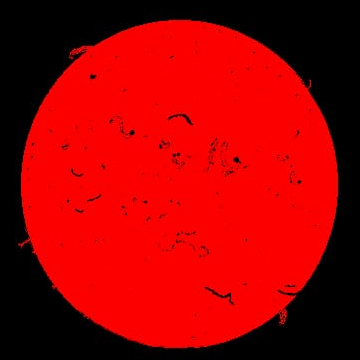
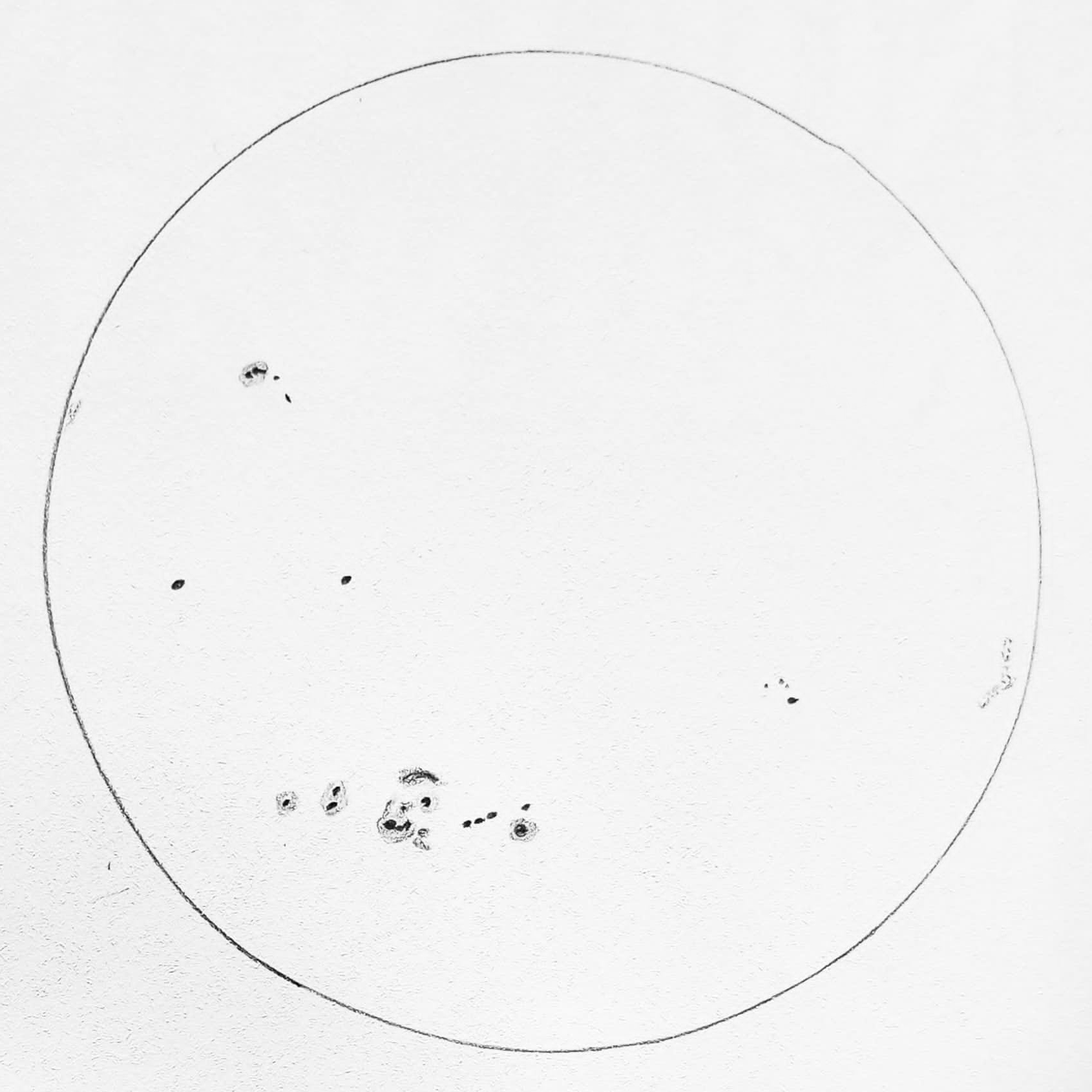
The solar disk sketched using the Tasco with a 25 mm Kellner eyepiece providing a magnification of 28x. An amazing amount of detail was visible!
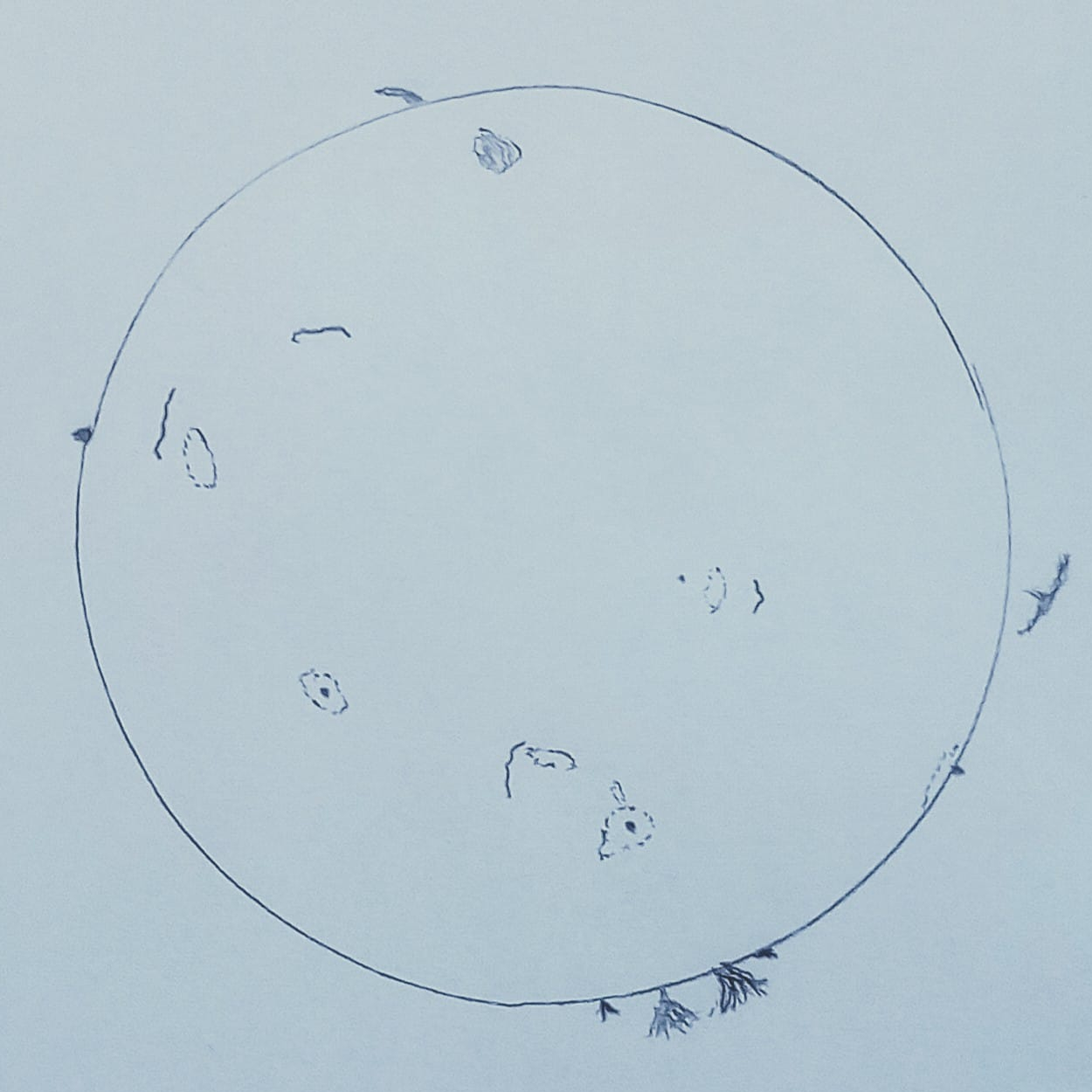
Below left: the solar disk sketched at the eyepiece of OASI's Coronada PST on an alt-az mount, using a Baader Mk. IV zoom eyepiece at 25 mm, providing x16 magnification. There are two impressive prominences at the 5 o'clock position. Below centre: an image taken at the eyepiece. Below right: an image taken by Andy Gibbs with a smartphone camera at the eyepiece of a Lunt LS60THa/B1200 on a Solar Quest mount.


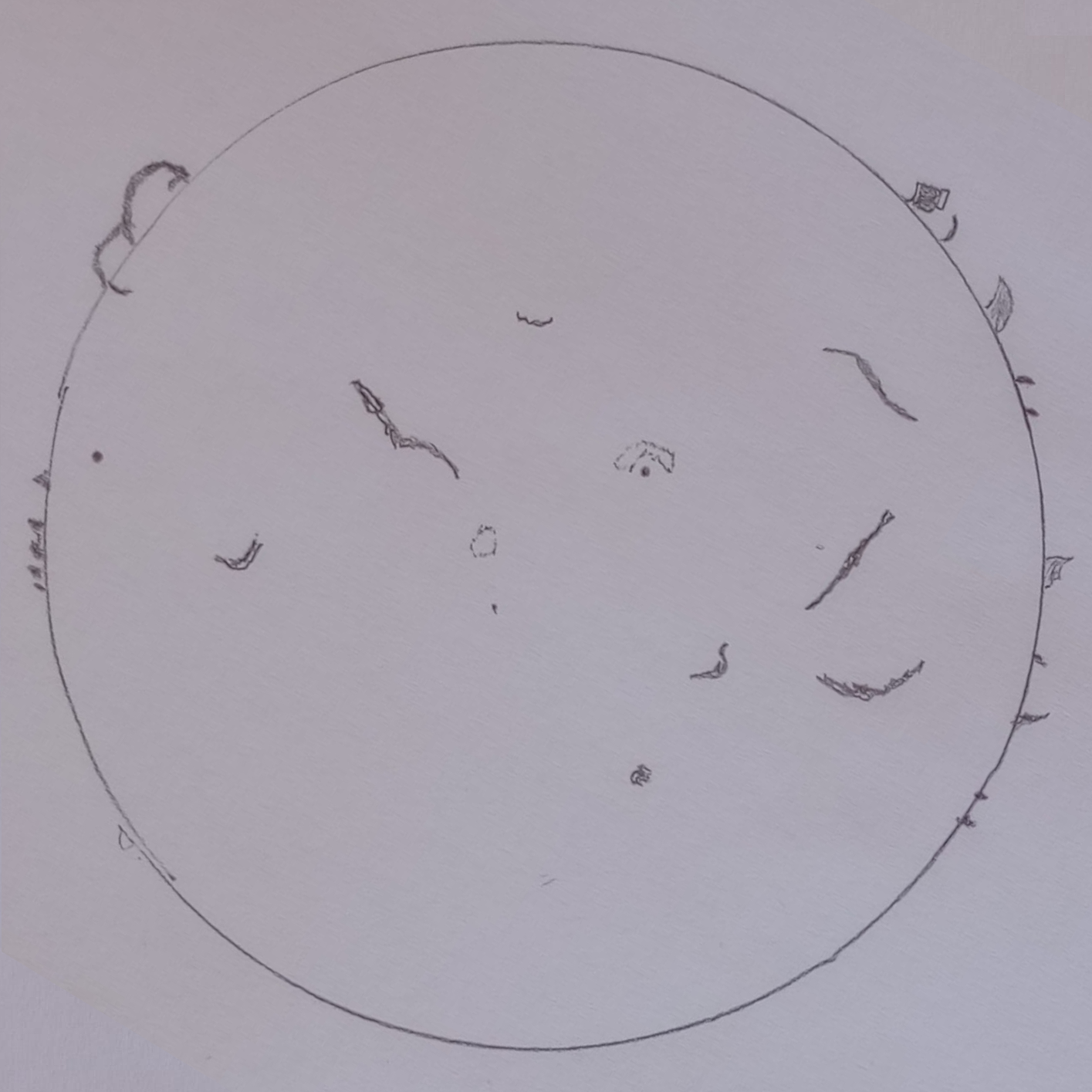
Below left: a sketch made at the eyepiece of the LS35 using a 20 mm Plössl eyepiece providing a magnification of 20x. The LS35 was mounted on an iOptron Cube Pro driven mount. The sketch has been L-R inverted and rotated to provide "true" orientation. There is an interesting prominence at the 10.00 o'clock position. Below right: the corresponding GONG image.
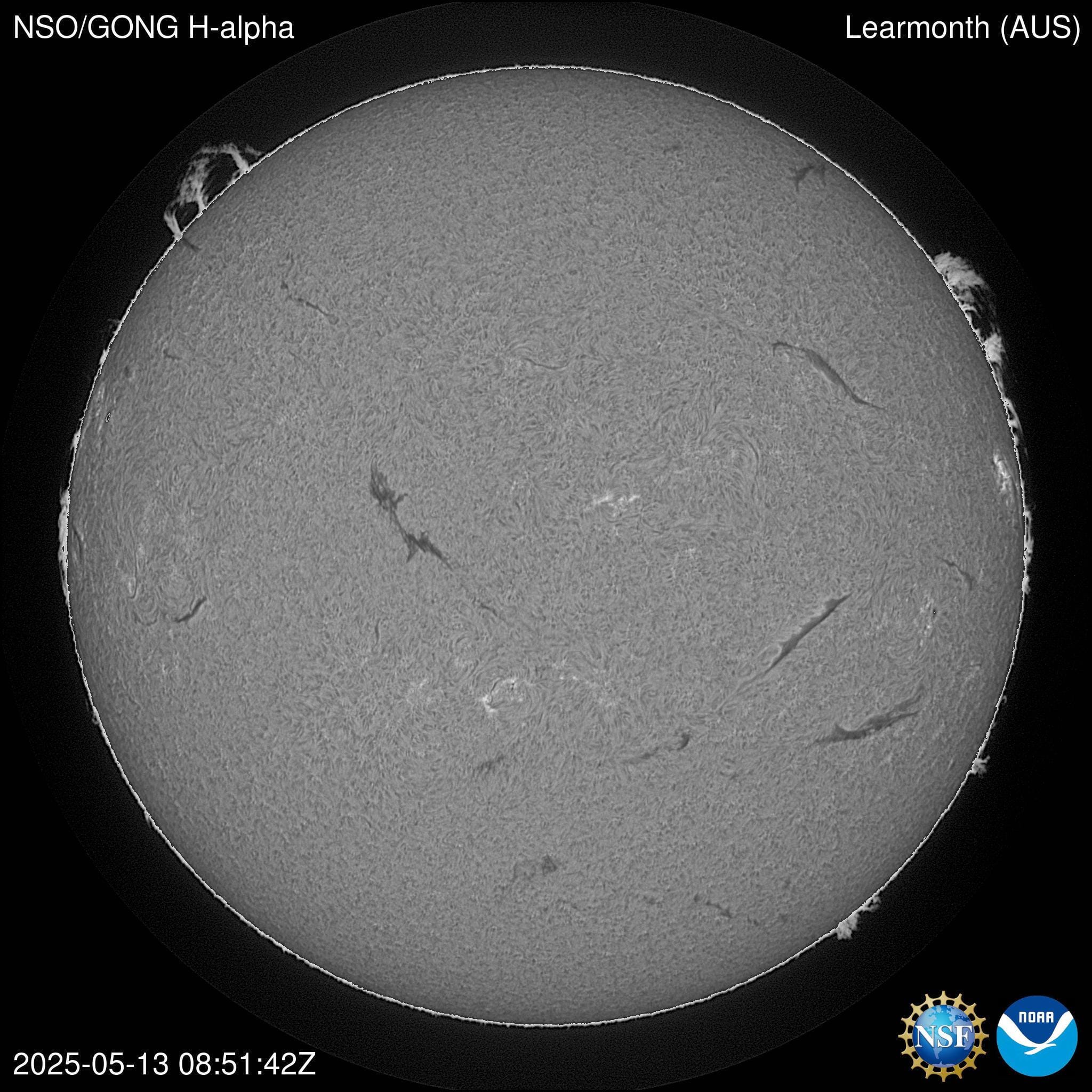
Below left: a sketch made at the eyepiece of the LS35. I used a 20 mm Plössl eyepiece providing a magnification of 20x. The sketch has been L-R inverted to give "true" orientation. The Sun appeared orange-red in colour with the surface having a texture similar to that of orange peel. The sunspot near the centre of the disk was black. Solid lines represent filaments, which appeared brownish; dotted lines represent active regions, which appeared sandy-coloured. Interesting prominences including a fan and a magnetic loop were visible on the upper-left limb. Below right: an image captured on the same day by OASI Chairman Andy Gibbs, using a Seestar S50 in "solar" mode.
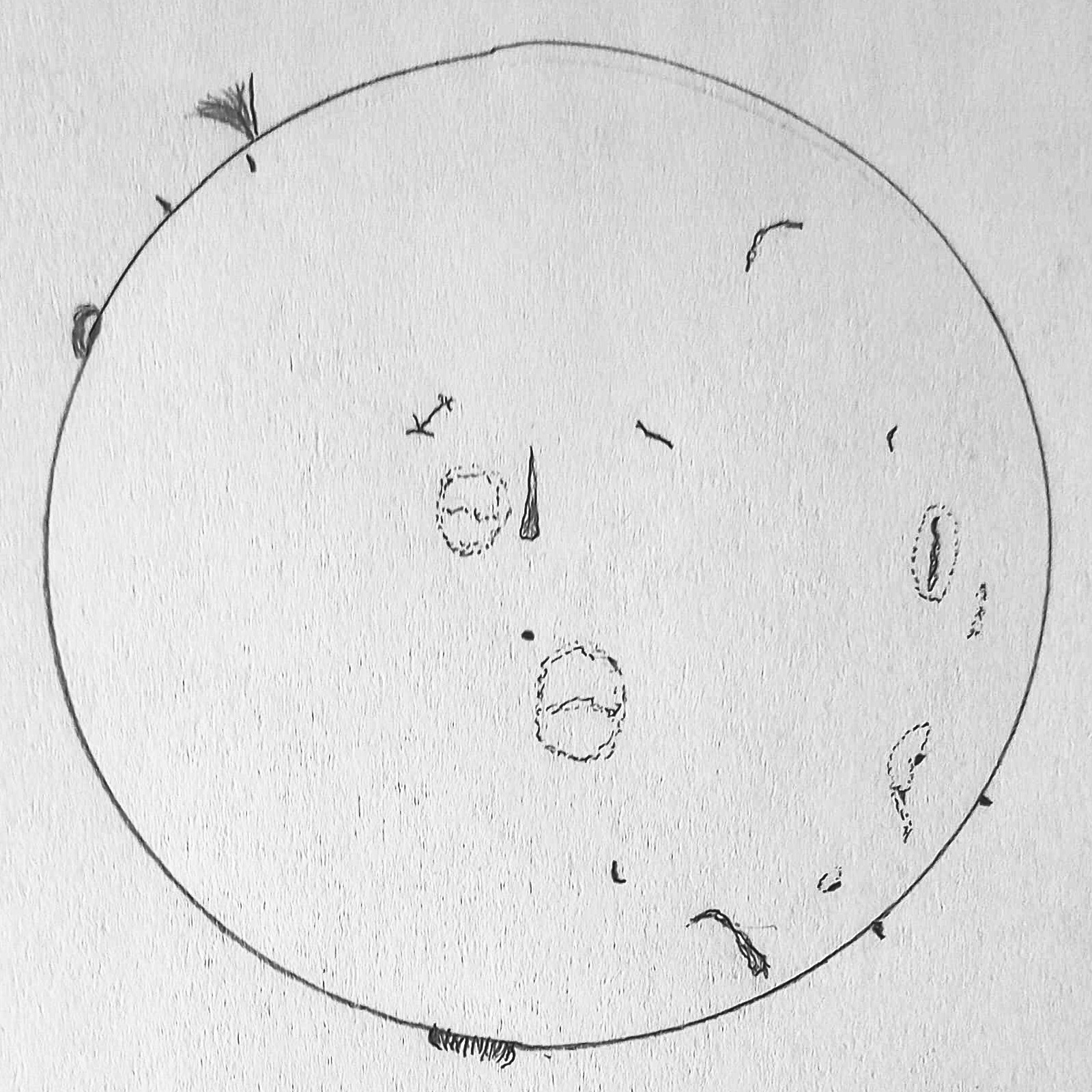 Sketch.
 Seestar S50.
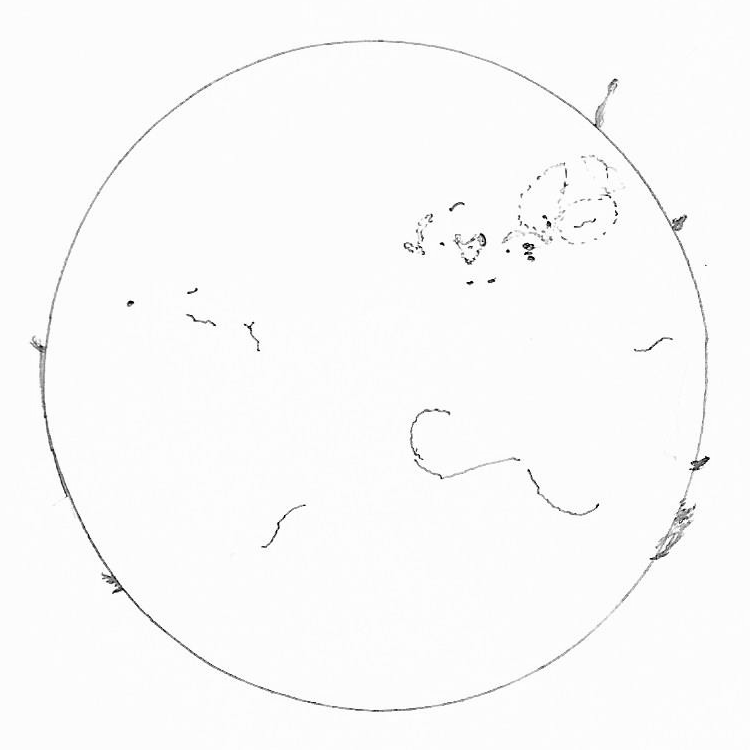
Below left: a sketch made at the eyepiece of the LS35. Below right: the corresponding GONG image.

Below left is a pencil sketch made using the PST with a 20 mm Plössl eyepiece providing a magnification of 20x. After some trial and error to achieve optimum focus, I found cupping my hands around the eyepiece significantly improved contrast. Wearing a wide brimmed hat reduced the glare from the Sun, and an adjustable observing chair provided a comfortable posture! My technique was detune the PST to the white light range to sketch the sunspots: this helped to anchor the sketch. I then returned the PST to the Hα range to sketch active regions, prominences, and filaments.
The colossal sunspot group AR13664 (labelled below in shortened form as 3664) triggered an intense aurora on 10 May.
For comparison purposes, below right is an image taken on the same day by the Helioseismic and Magnetic Imager (HMI) aboard the Solar Dynamics Observatory (SDO) satellite.
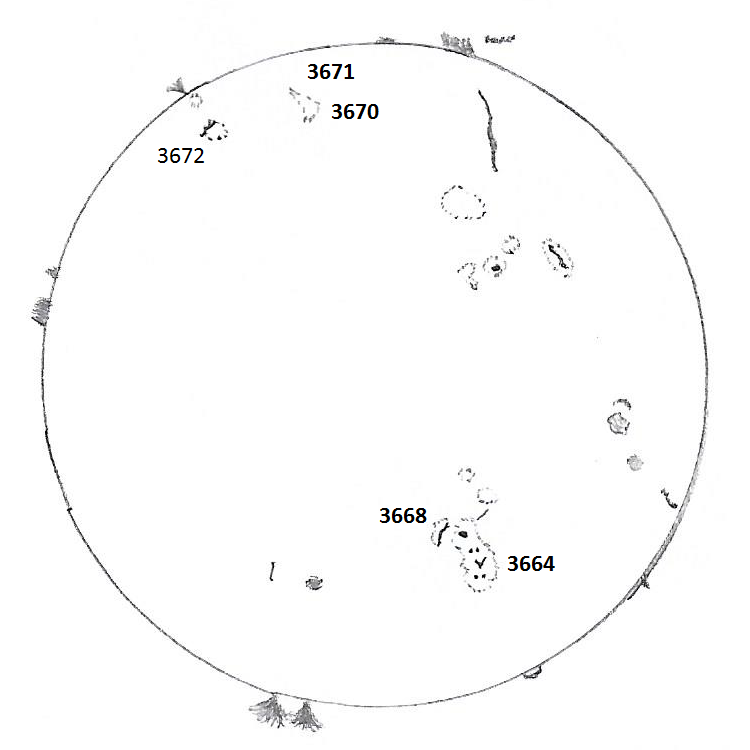 Sketch.
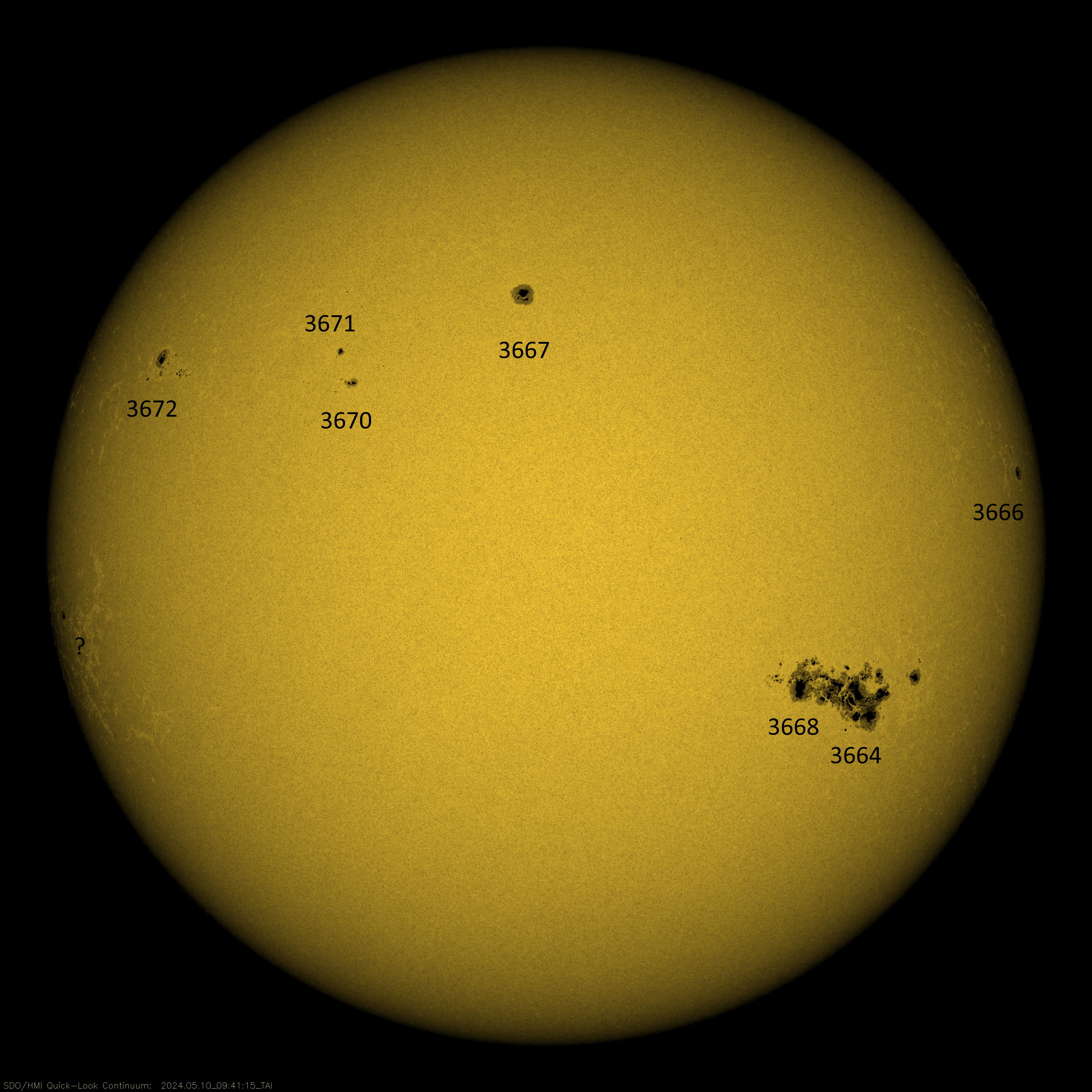 HMI aboard the SDO.
Sketches of the Sun in white light using the Celestron C4R with a Star 25 mm Plössl eyepiece providing a magnification of 40x. Comparison of the images shows the motion and evolution of active regions on the solar disk.
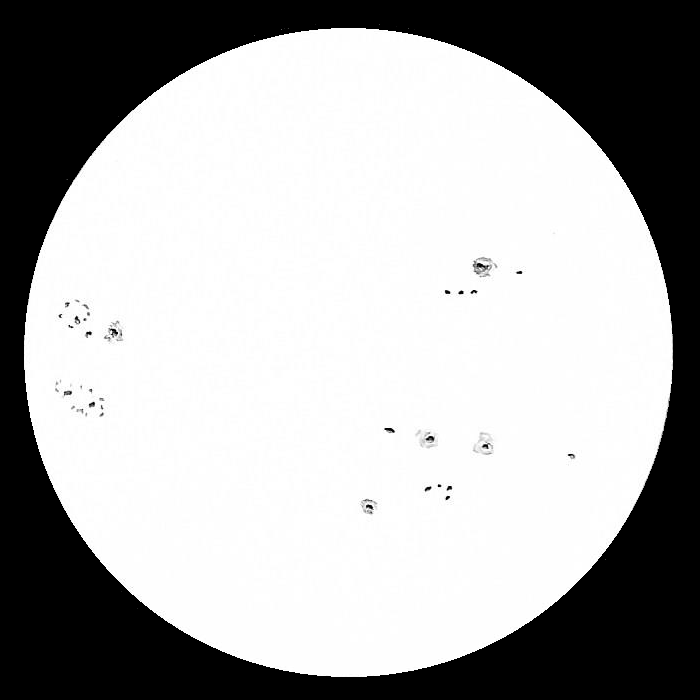 06 December 2023.
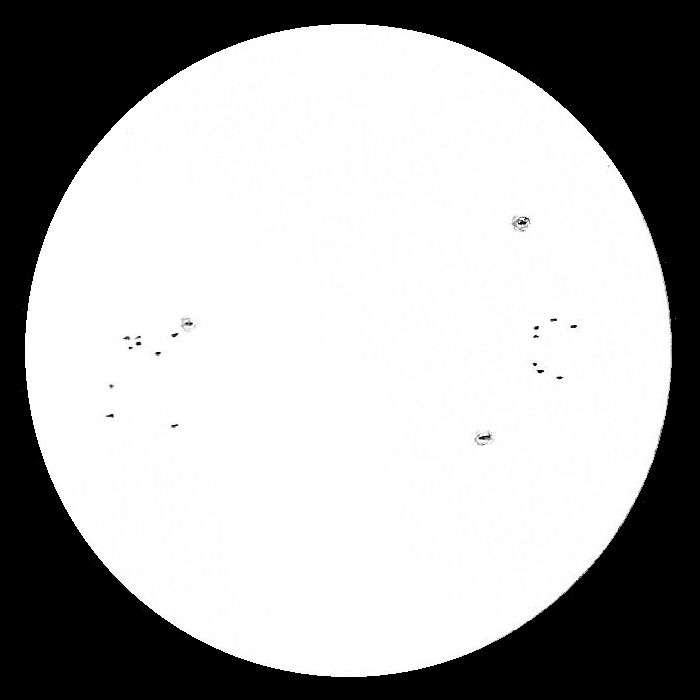 08 December 2023.
Creation of a sketch of the Sun using the PST with a 20 mm Kellner eyepiece providing a magnification of 20x. The image features prominances, filaments and active regions. Left-right: orignal pencil sketch, scanned version with colour added, final version with marbling added to prove the most realistic representation of the view through the eyepiece.



The solar disk sketched using the PST with a Meade 26 mm Super Plössl eyepiece providing a magnification of 15.4x. The image features prominances, filaments and active regions.
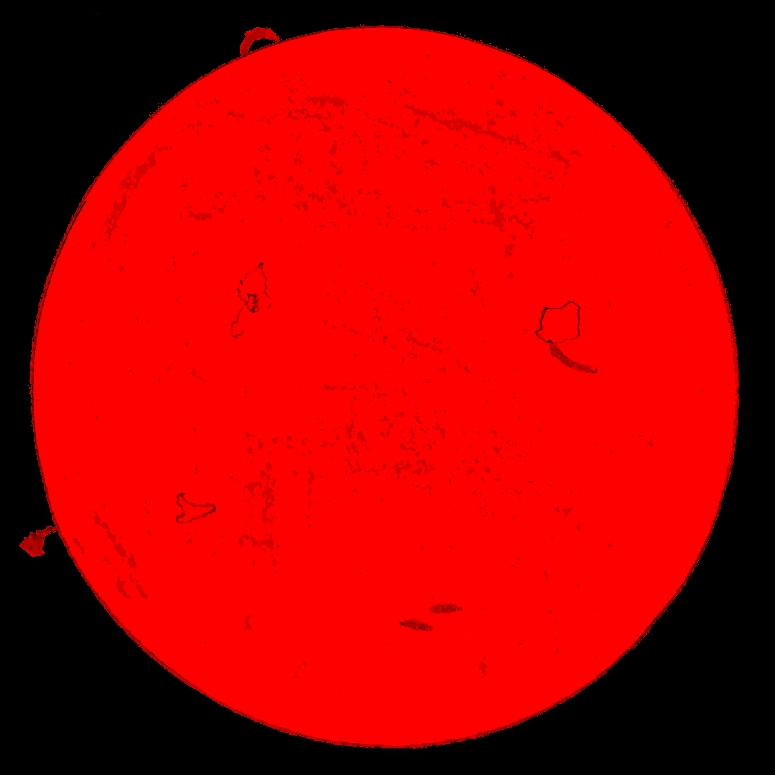
The solar disk sketched using the PST with a Meade 26 mm Super Plössl eyepiece providing a magnification of 15.4x. The scanning process lost some detail but retained key features including prominances, plages, filaments and active regions. Clearly a lot was happening on the solar disk!
Neil Morley