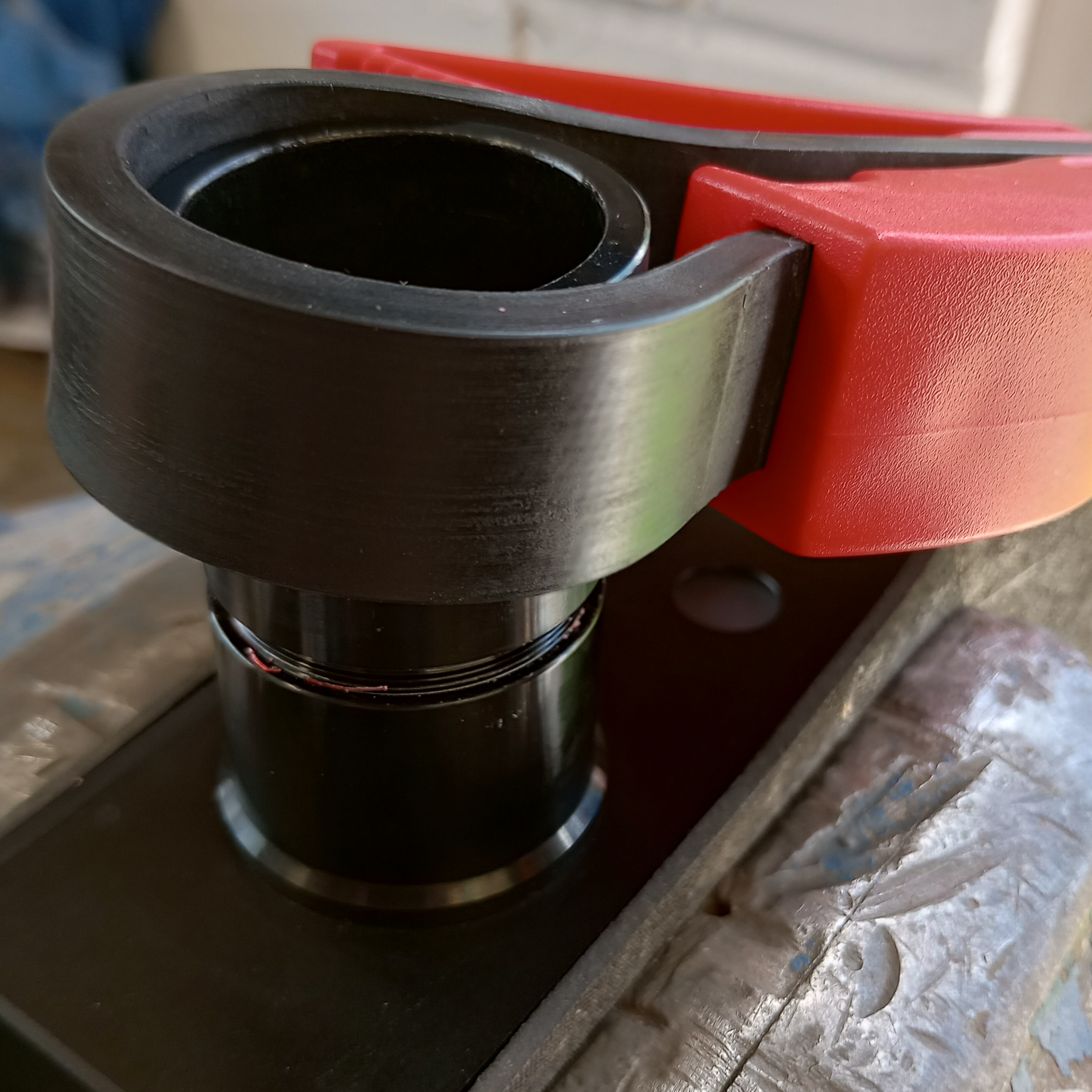
 PST body securely clamped in the vice with a strap wrench applied.
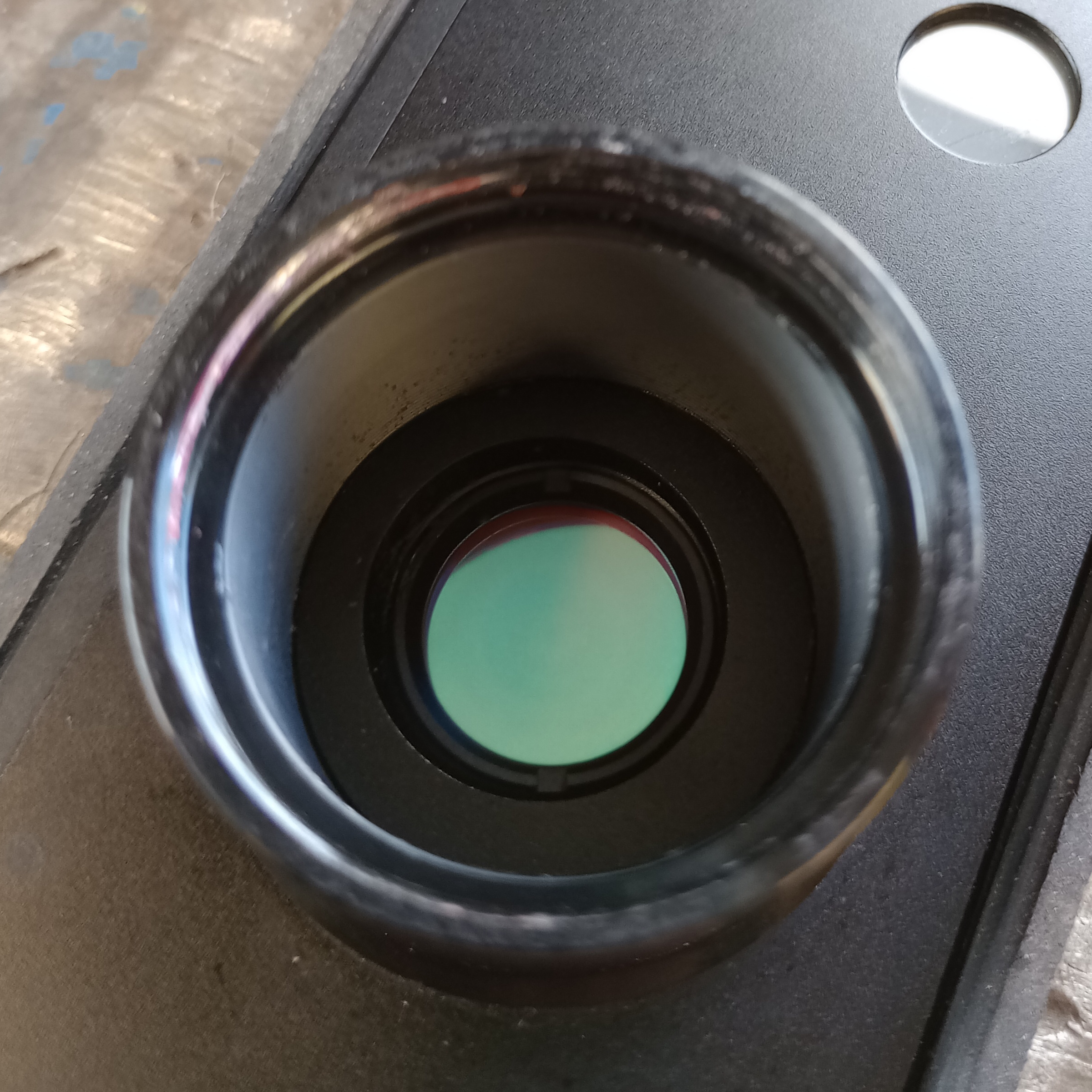 Exposed ITF filter at the base of the eyepiece tube.
Orwell Astronomical Society (Ipswich)
Replacement of the Induced Transmission Filter (ITF) in OASI's Coronado PST (Cataract Surgery!)
David Lunt founded Coronado Instrument Group in Tucson Arizona in 1997. His mission was simple: making the dynamic chromosphere of the Sun accessible to a wide audience starting with affordable entry-level Hydrogen-Alpha (Hα) equipment.
The Coronado Personal Solar Telescope (PST) was launched in 2003 at a time when Hα telescopes cost around $5-10k. Priced at an extremely competitive $500 and retailing in the UK for approximately £500 (with import duties and extra taxes), the PST provided the first affordable entry-level Hα telescope.
The specification was a 40 mm diameter objective with 400 mm focal length and sub 0.1 nm bandwidth at 656.3 nm. Intended for visual observations but also imaging with an appropriate camera (note the limited back-focus), the PST quickly became a sales success.
Increased customer demand for Hα products stretched Coronado's limited production facilities. Recognising this, the management team initiated discussions with Meade Instruments Corporation who were experienced in large scale production. In 2004, Meade acquired Coronado for circa $1.7m. By then, David Lunt had become seriously ill, and in 2005 he sadly passed away.
In 2006, Coronado production was moved to Meade's manufacturing plant in Irvine California. In 2007, David's son Andrew (Coronado lead engineer) with members of the original Coronado team left Meade to found Lunt Solar Systems. In 2008, Coronado production moved to a new manufacturing plant located in Tijuana Mexico.
Lunt went on to release a completely new range of Hα products using variable air-pressure tuning. In 2024, after a period of 20 years, the original Coronado mechanical compression tuning patent expired. In 2025, the Chinese manufacturer Synta applied the Coronado technology to SkyWatcher-branded 76 mm and 100 m Heliostar Hα scopes as well as the entry-level Acuter-branded 40 mm Phoenix. In the same year, Meade Instruments ceased operations putting an end to Coronado manufacture at the Meade Tijuana Mexico plant.
OASI's PST, purchased in 2007, was probably manufactured at Meade's Irvine California plant. For around three years, views remained bright, sharp, and pristine. Around 2010, a darkened ring at the edge of the visible field appeared. Inside the ring, the Sun's brightness and contrast were significantly reduced. Towards the centre, views remained brighter, clearer and pristine. Over the next two years, the darkened ring thickened and eventually consumed the entire visible field. The level of degradation became apparent in 2015 when OASI acquired a Lunt LS50 50 mm Hα refractor. The LS50 provided a brighter and more detailed view of the solar disc than the PST. It seemed the PST had developed a cataract! The darkened view made eye positioning and tuning more difficult, making the overall PST experience disappointing.
In 2023, I started online research into the degradation in the PST's performance. It didn't take long to find extensive discussions within the cloudynights.com solar observing and imaging forum including [1]. It turned out that after 3-5 years, a common problem affected virtually all PSTs. The root cause was oxidation of multilayer metallic coatings within an energy reduction filter called the Induced Transmission Filter (ITF). Its function is blocking harmful ultraviolet and infrared radiation wavelengths, preventing them reaching the observer.
In early production PSTs, the ITF was incorporated within the 40 mm diameter cemented doublet objective. In factory-fresh condition, the objective ITF had a distinctive metallic gold appearance matching the gold colour of the scope's optical tube. Over a period of time, the ITF turned rusty brown, leading to the "PST rust" moniker. I am aware of some extremely isolated cases of the very first production PST objectives remaining intact. These PSTs manufactured in the Tucson plant are comparatively rare and collectible.
For a period of time, Meade provided a repair service to address the "PST rust" issue. It involved a) replacing the rusted objective with a standard 40 mm 400 mm focal length objective with a blue anti-reflective coating and b) installing a replacement eyepiece tube with internal housing at its base containing a smaller diameter 18 mm ITF filter. By the time the OASI PST was purchased in 2007, PST production had moved over to the new variant with blue objective and smaller diameter internal ITF.
The internal ITF was also implemented using soft metallic multilayer coatings between two layers of optical glass. The evidence points to the filter edges being unsealed or at best improperly sealed and the same rusting failure occurring over time. With repeated use and associated thermal cycles, atmospheric moisture found its way inside the filter oxidising the metallic coatings. Rusting started from the outside and worked towards the centre of the glass. There was no safety issue because the filter become more opaque and continued to block harmful ultra-violet and infra-red radiation. A notable side effect of relocating the ITF to the eyepiece barrel was that filter rusting became invisible to the customer.
Fortunately, at the time of my research in 2024, two well-established commercial replacements for the 18mm Coronado/Meade ITF were available with excellent track-records:
In July 2024, armed with this knowledge, and knowing this was a common problem, I decided to access and inspect the OASI PST ITF filter for signs of rusting. Reports on the cloudynights.com solar observing and imaging forum warned me it was probable Locktite had been liberally applied to the PST eyepiece threads and elsewhere to discourage tampering. I soon confirmed the OASI PST was affected as its eyepiece tube would not unscrew. The recommendation was to use a strap wrench to get things moving. Fortunately I had one in my toolbox!
I arranged a timely visit to the legend (Martin Cook) as I thought two pairs of eyes were better than one. Martin secured the PST prism housing in a vice in his workshop with rubber straps at the sides preventing scratches. With the PST securely clamped in place, I applied the strap wrench to the top of the eyepiece tube then proceeded very slowly and carefully to unscrew the eyepiece tube. At the start, there was a lot of resistance and it was difficult to see any movement at all. Martin applied a pencil mark to the top edge of the eyepiece tube to track any rotation. It was confirmed but remained slow due to the resistance. Fortunately, the resistance reduced during subsequent rotations, and exposed threads finally appeared. The process took around 10 minutes, and successfully separated the two halves of the eyepiece tube, exposing the ITF filter at the bottom of the eyepiece tube. This was good news and exactly as expected.
PST body securely clamped in the vice with a strap wrench applied.
Exposed ITF filter at the base of the eyepiece tube.
Remaining pieces of Locktite were removed by careful application of a flat bladed jewellers screwdriver to the threads inside the lower portion of the eyepiece tube, then a bulb blower.
Using a lens removal tool, the retaining ring atop the ITF was removed. This allowed the ITF to be extracted using a lens removal suction tool. Initially rusting was not visible because the ITF had a reflective silver coating making it look pristine under normal daylight conditions. Applying camera flash revealed the tell-tale rust symptoms. In fact, the ITF was completely rusted over, just like numerous examples online.
The next steps involved approval from the committee to ordering a replacement ITF in June 2024. As Maier were out of stock, I ordered the BelOptik ITF replacement. Oliver Smie who runs BelOptik as a sole trader confirmed the PST would remain eye-safe for visual use if the BelOptik ITF replacement was the sole change to the optical system. This was definitely the case here!
The BelOptik ITF arrived in July 2024 and I fitted it to the PST. It needed to be oriented in the eyepiece tube with the gold side facing downwards towards the Sun and the red side facing upwards towards the blocking filter and eyepiece.
Testing the repaired PST that same day on the Sun was a revelation. Brightness and contrast were restored and pretty well on a par with the Lunt LS50. This was confirmed by OASI members who looked through the scope. The PST has since been used at OASI meetings and outreach events. In summary, this was definitely a worthwhile improvement.
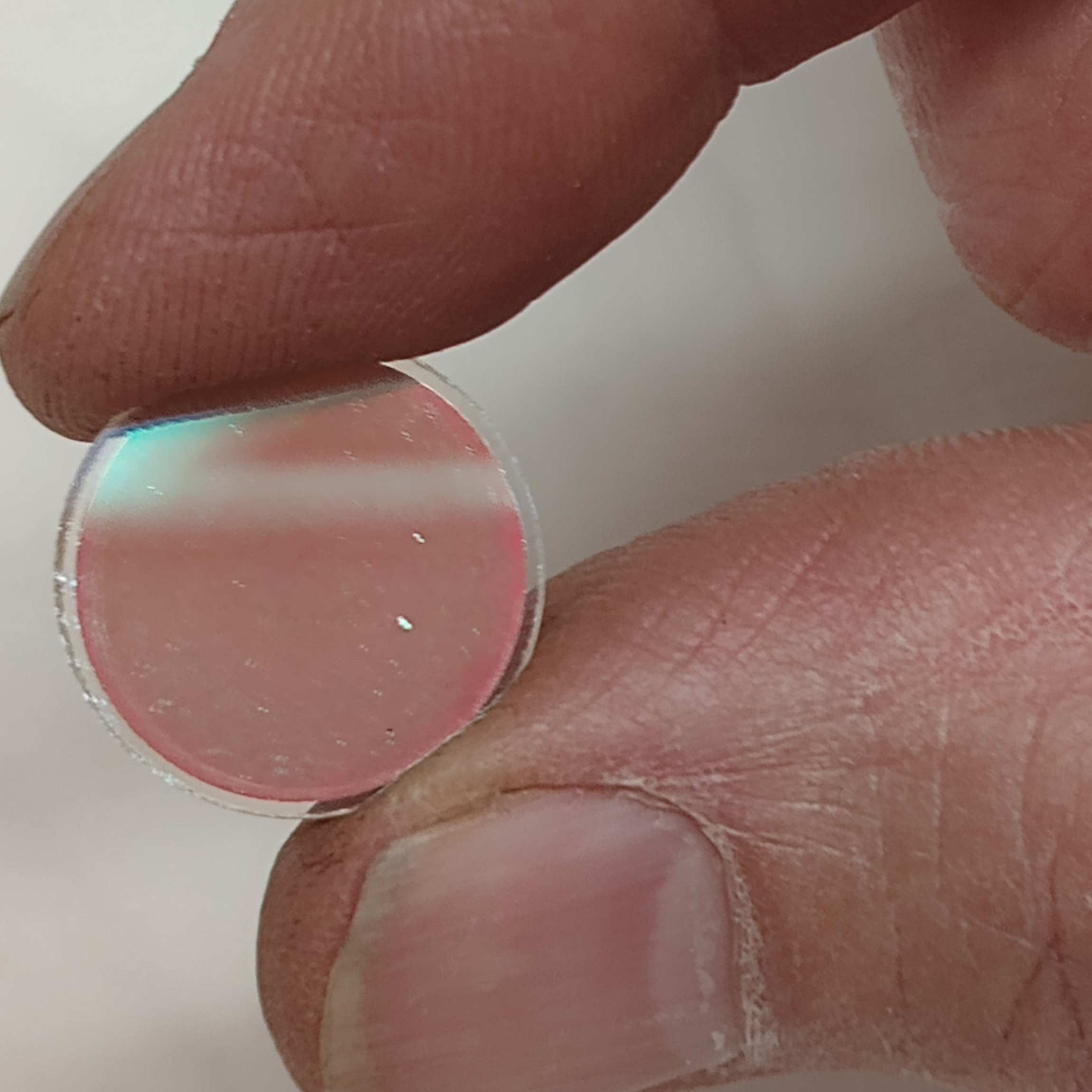 Rusted ITF!
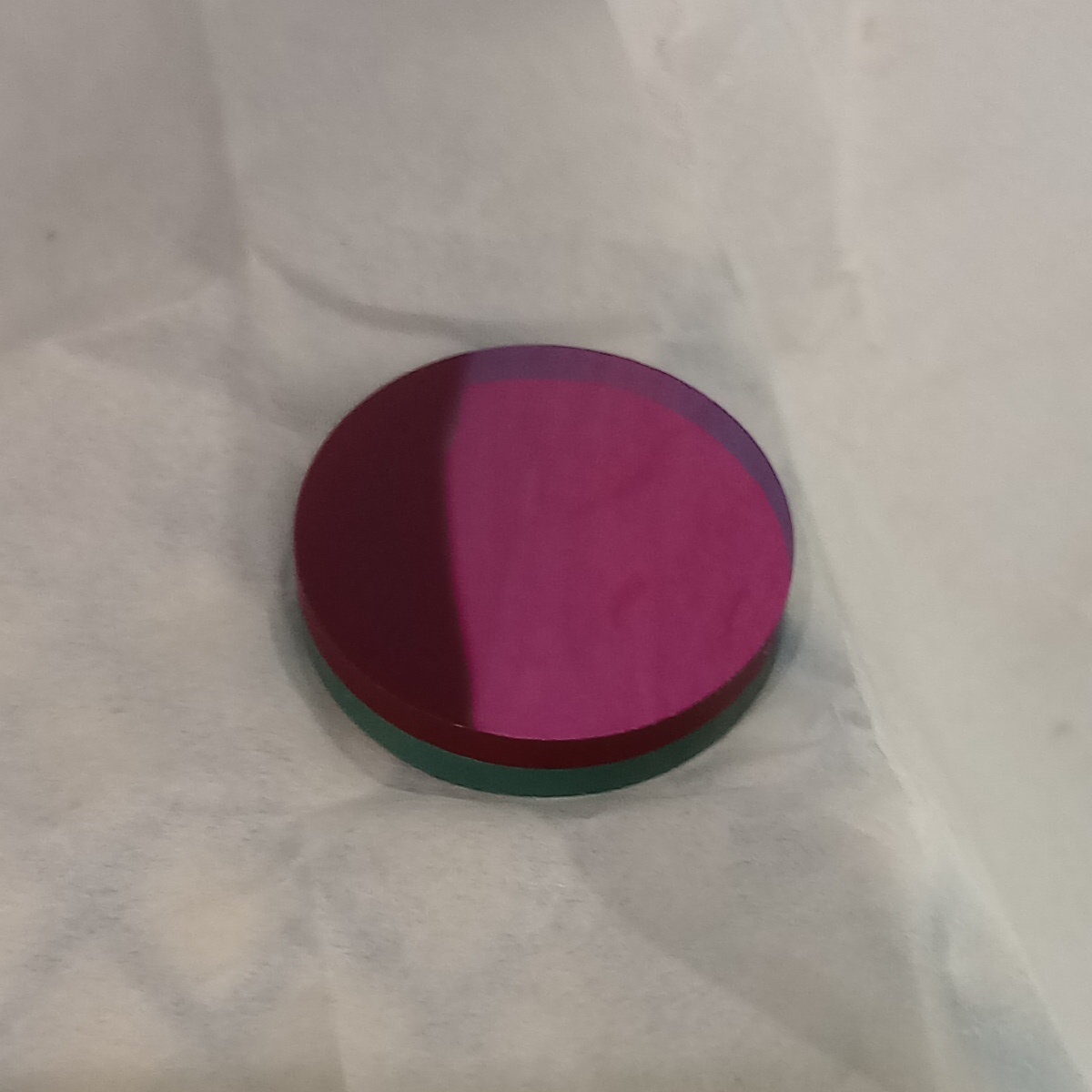 Replacement BelOptik ITF filter before installation.
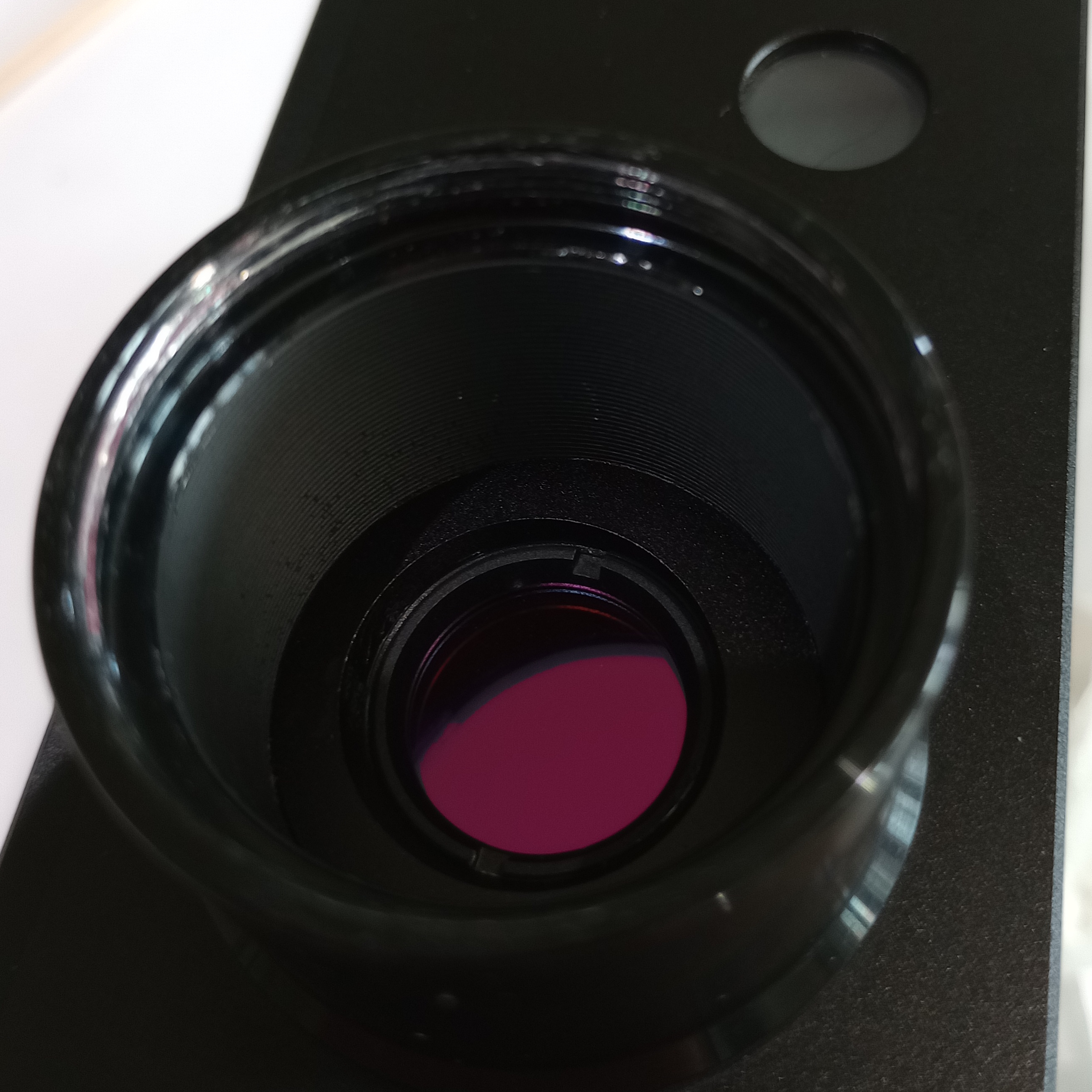 BelOptik ITF filter after installation.
The following diagram shows the major features of later production PSTs, including OASI's example.
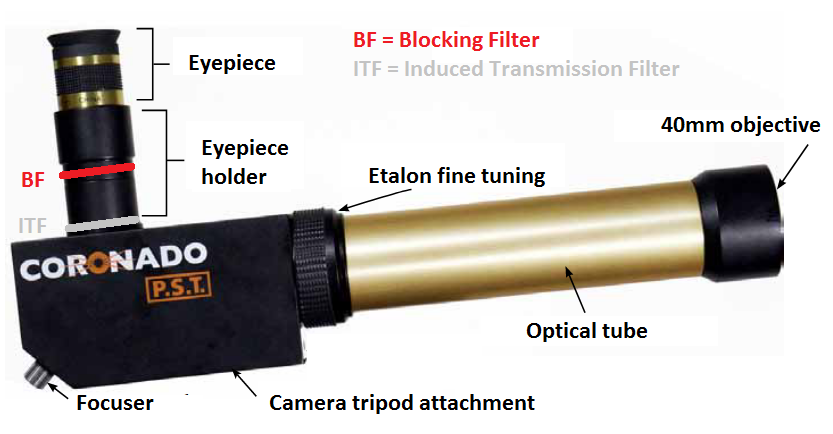 Features and controls of the Coronado PST.
The PST is a refractor with additional filters enabling eye-safe Hα viewing and imaging. A simplified description of the filters is as follows:
The black housing contains a pentaprism acting like a conventional 90° diagonal by redirecting light from the etalon towards the filters in the eyepiece tube. Adjusting the focuser mechanically shifts the pentaprism inside the housing to achieve focus. An additional prism inside the housing redirects light from a small aperture at the front to the integrated solar finder, atop the housing, a unique feature making the Sun very easy to acquire.
Neil Morley